
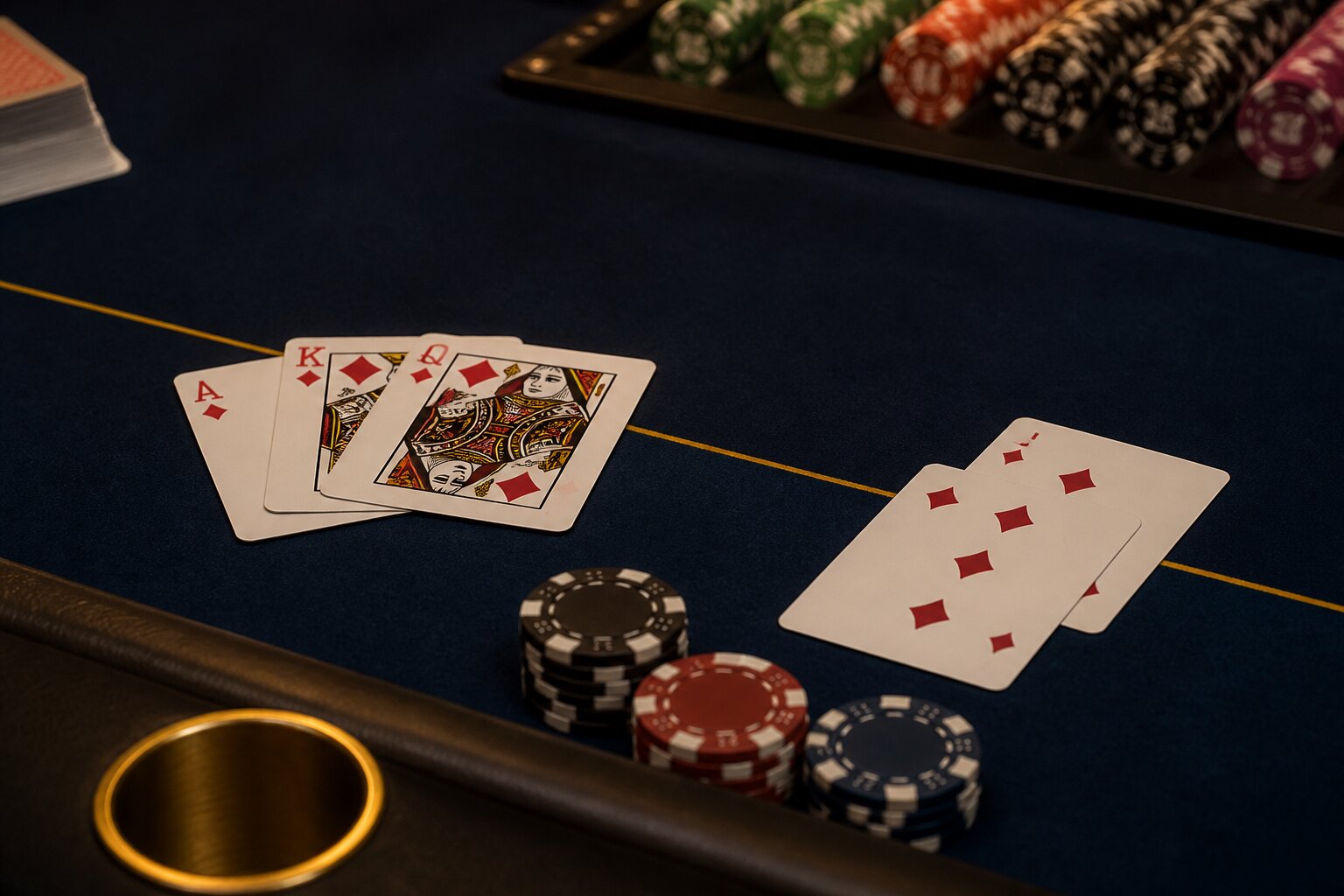
Ever wondered how to boost the excitement at the blackjack table? The 21+3 side bet adds a twist, offering a chance to win from the three-card poker hand formed by your two cards and the dealer’s face-up card.
One of the highest-paying outcomes for this side bet is called suited trips. This guide explains what suited trips are, how often they occur, and what to expect if you try the 21+3 bet.
Read on for clear explanations, useful examples, and practical context so you can decide whether the side bet fits the way you like to play.
What Is the 21+3 Side Bet in Blackjack?
The 21+3 side bet is an optional wager placed alongside your normal blackjack stake. It uses your two cards plus the dealer’s upcard to form a three-card poker hand. If those three cards match one of the winning combinations on the paytable — for example a flush, straight or three of a kind — you receive a payout according to that table.
Placing the bet is straightforward: you put chips in the marked 21+3 area before cards are dealt. Because the side bet is separate from the main game, its outcome does not affect whether you win or lose the blackjack hand itself.
This feature is designed to add variety to a round, not to replace standard blackjack strategy. Payouts are higher than usual but occur less frequently; the increased reward reflects the lower probability of making the qualifying poker hands.
How Do Suited Trips Work in 21+3?
Suited trips is the three-of-a-kind variant that also requires all three cards to share the same suit. In practice that means your two cards and the dealer’s upcard must be identical in rank and suit — for example, three Queen of Hearts.
Because the side bet only considers those three cards, suited trips cannot involve any other cards in play. The strict requirement for both matching rank and suit is what makes this outcome rare and high paying.
To picture it: if you hold two King of Diamonds and the dealer’s upcard is also King of Diamonds, that combination qualifies as suited trips. In most paytables this sits at the top of the reward scale, above hands such as straight flushes (when defined differently by specific rules) or regular three-of-a-kind.
What Are the Odds of Getting Suited Trips?
Suited trips is among the least likely results on the 21+3 paytable. In a single-deck shoe the probability is approximately 0.02% — roughly one occurrence in every 5,200 hands. This low probability comes from the very specific card match required: three cards of the same rank and suit.
The exact probability shifts slightly with the number of decks in use and the way a casino shuffles and deals. More decks generally alter the combinatorial makeup of the shoe and change frequencies for three-card poker hands, but suited trips remains an infrequent event in all standard setups.
Understanding this helps set expectations: large payouts compensate for long stretches without that outcome, so the side bet is best treated as an occasional extra rather than a dependable income source.
How Are Payouts Calculated for Suited Trips?
Payouts for suited trips reflect its rarity. A common payout is 100 to 1, meaning a £1 stake returns £100 in winnings plus the original stake. Some casinos use slightly different tables, so the exact return can vary.
Paytables rank outcomes by probability and assign payouts that attempt to balance frequency with reward. Casinos set those numbers so the side bet generates a higher house edge than standard blackjack, which explains both the bigger prizes and the overall lower expected return to the player.
Before placing a 21+3 wager it’s sensible to check the table’s paytable so you know what a suited trips win would return in that specific game.
Are Suited Trips a Common Win in Blackjack?
No — suited trips are rare. Because they require three matching cards in both rank and suit among just your two cards and the dealer’s upcard, most players will see this outcome only occasionally, if at all.
That scarcity is the reason for the high payout. Suited trips are a novelty outcome that can add excitement to a hand, but they are not something you should plan your play around.
There are several reasons suited trips are not a reliable source of returns:
- The probability of seeing three cards that match in both rank and suit is very low.
- Side bets that pay for rare combinations typically have a higher house edge than the main game.
- Relying on occasional big payouts increases variance and can lead to unpredictable short-term results.
If you prefer steadier returns, the main blackjack game offers much better long-term odds than side bets such as 21+3. Treat suited trips as an occasional thrill rather than a core part of your strategy.
Why Do Players Choose the 21+3 Side Bet?
Many players add the 21+3 side bet to bring variety into a session. The side bet offers different winning patterns and the possibility of a large payout from a small additional stake, which some find entertaining.
Others enjoy the interplay between their cards and the dealer’s upcard and the extra way to win on any given hand. For players who focus on the main game, it’s a light option to try occasionally without changing core strategy.
Deciding to play the side bet usually comes down to personal preference: whether you value the occasional large payout and extra excitement more than conserving your bankroll under the main game’s better odds.
Is the 21+3 Side Bet Worth It?
Whether the 21+3 side bet is worth it depends on what you want from your time at the table. The side bet offers higher payouts but generally carries a higher house edge than regular blackjack. That means, over many hands, the side bet is likely to reduce your overall bankroll more quickly than standard play.
House Edge for 21+3 Side Bets
Average house edges for 21+3 sit in the approximate range of 3% to 7%, depending on the paytable and the number of decks. By contrast, main-game blackjack — when played with sound decisions — typically presents a house edge well under 1%. Given that gap, frequent play of the side bet is likely to be costly in the long run.
If you enjoy the occasional extra wager for entertainment and are comfortable with the added risk, the 21+3 side bet can be an appealing feature. If preserving your funds is a priority, it’s better to avoid or limit such wagers.
Common Myths About Suited Trips
A few misconceptions persist around suited trips. One is that patterns can be found to predict when suited trips will occur. In reality, each deal is governed by the deck composition at that moment and the random distribution of cards; past outcomes do not change future probabilities in a standard shuffle-and-deal environment.
Another myth is that suited trips happen more often than they do because memorable wins stand out. The reverse is true: rare events are easily remembered while the many non-occurrences are not. Finally, repeatedly betting on 21+3 does not improve the individual-hand probability of suited trips; each deal carries the same underlying combinatorial likelihood given the current shoe.
Understanding these points keeps expectations realistic and helps players decide whether the side bet matches their preferred style of play.
Where Can You Play Blackjack With the 21+3 Side Bet?
The 21+3 side bet appears at many casino tables and in a wide range of online blackjack titles. If you want to try it, look for tables that list the 21+3 paytable before you place any bets so you’re clear on the payouts and rules.
Online platforms and land-based venues vary in their paytables and deck configurations, so checking the details for each game is useful. Games offered in regulated markets come with controls and information to help you play within your limits.
You must be aged 18 or over to play for real money. Set staking limits that suit your budget and use available tools to manage time and spend. These simple steps help keep play enjoyable and under control while you explore optional features like the 21+3 side bet.
Final note: suited trips is an exciting, high-reward outcome when it does happen, but its rarity means the side bet should be treated as an occasional addition to play rather than a central strategy.
**The information provided in this blog is intended for educational purposes and should not be construed as betting advice or a guarantee of success. Always gamble responsibly.