
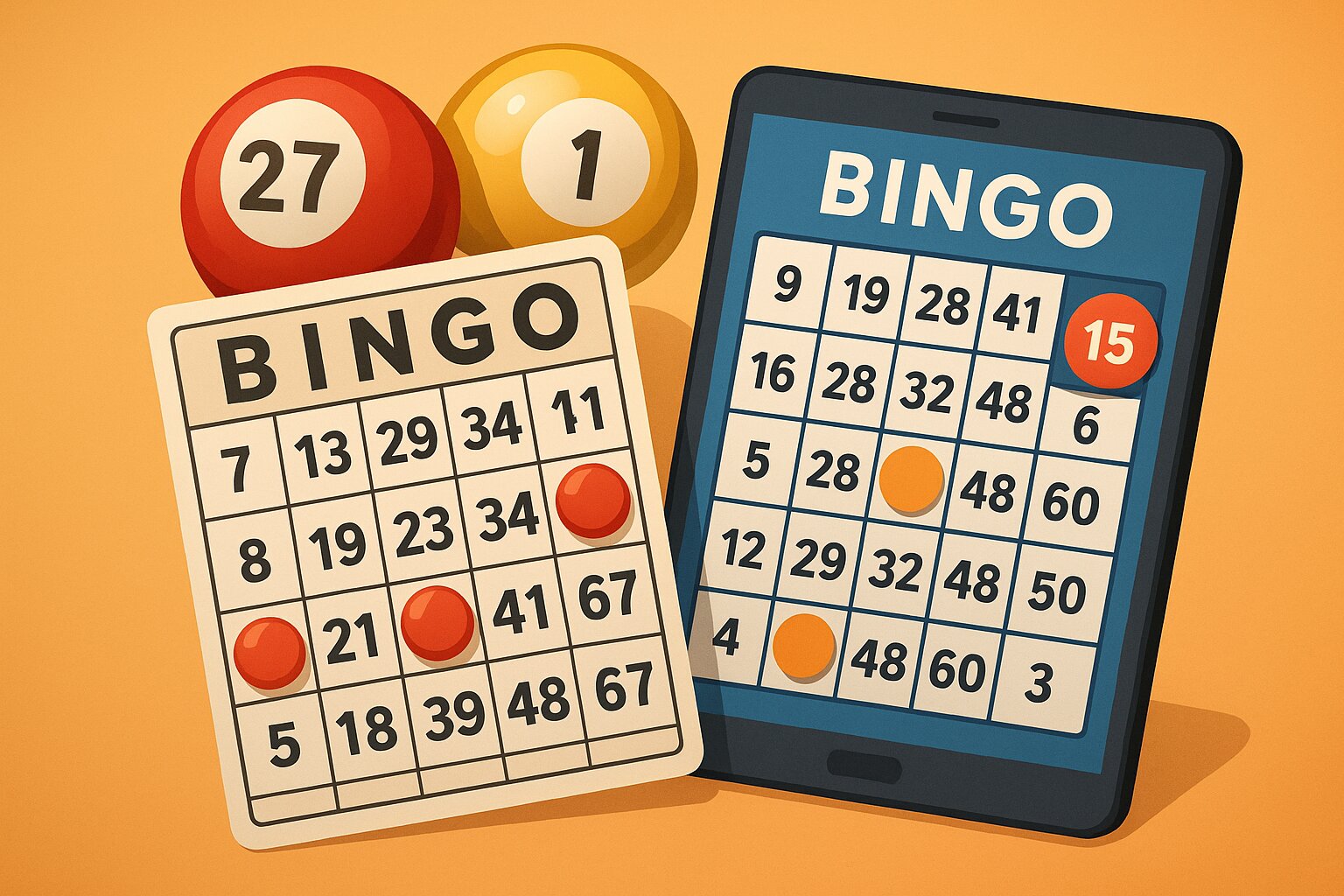
Bingo might seem simple at first glance, but there’s more to it than calling out numbers. Today you can choose from several formats—both in halls and online—that change the pace, ticket layout, and prize structure.
Whether you prefer an in-person session with friends or a quiet online game, each version offers a slightly different experience. Read on to find which style fits you best and how the formats compare.
What Are the Main Types of Bingo Games in the UK?
Bingo in the UK is played in a handful of established formats, each with its own ticket layout and winning conditions. Below is a concise guide to the main types you’re likely to encounter.
90-Ball Bingo
The traditional format widely played in bingo halls and offered online. Each ticket has 15 numbers across three rows, and prizes are usually awarded for one line, two lines, and a full house.
Games can be relatively slow paced compared with some alternatives, which many players enjoy for the social atmosphere and longer sessions. Large halls and many online rooms run multiple games and prize tiers, including community jackpots and occasional promotional prizes.
75-Ball Bingo
Common on online platforms, this type uses a 5x5 grid. Players complete specific patterns rather than simply filling rows, which creates more variety in play.
Patterns might include shapes such as lines, letters, or more complex figures, and game styles can vary between venues and sites. The central square is often a free space, which changes strategy slightly compared with fully numbered tickets.
80-Ball Bingo
Designed with online play in mind, this sits between the 75- and 90-ball formats. Tickets are 4x4 and games often use different patterns for winning.
Because of the smaller grid and varied patterns, games tend to move at a medium pace and can balance between quick rounds and more deliberate play. Many operators offer themed rooms or pattern-based promotions to keep play engaging.
30-Ball Bingo
Known as speed bingo, this is a much faster option with a 3x3 grid and a single prize for covering all nine numbers.
Rounds are short and intense, which appeals to players who prefer quick results and frequent games. Stakes and prizes are often lower, making it suitable for a brief session or for those who enjoy rapid gameplay.
Each format offers a different tempo and challenge, so the best choice depends on the experience you want rather than odds of winning. Keep track of your spending and play within limits that suit you, and seek help if gambling stops being fun.
How Is Online Bingo Different From Traditional Bingo?
Online and traditional bingo share the same basic premise, but the experience changes depending on where and how you play.
Location and convenience are the most obvious differences. Online play allows access at any time from a device, while physical halls run sessions at set times and offer a social atmosphere that many players enjoy.
Game variety and speed also diverge. Digital platforms can host multiple game types, themed rooms, and more frequent sessions, while halls typically focus on classic formats with a steadier pace.
Social interaction varies too. Halls present face-to-face conversation and communal excitement. Online rooms use chat features and community tools, which create interaction in a different way.
Finally, online games often include automatic marking of tickets, reducing manual checking. In halls, players use a dabber or marker, which some find part of the ritual. Both formats have the same core mechanics, but they deliver different practical and social experiences.
90-Ball Bingo Explained: The British Classic
90-ball bingo is the version most associated with British bingo culture. Its clear layout and simple prize structure make it accessible to newcomers and familiar to long-time players. The game is straightforward to follow, whether you play in a bingo hall or on an online site.
How to Play 90-Ball Bingo
Each ticket is a 3-row by 9-column grid containing 15 numbers, with five numbers and four blank spaces per row. Numbers from 1 to 90 are called one at a time, and players mark matches on their tickets as they are announced.
There are typically three prize milestones in each game:
- One line
- Two lines
- Full house (all fifteen numbers)
Winners are declared as soon as a line or full house is completed. Prize levels and the way winnings are shared can vary between games and venues, so check the rules for the specific session you are playing.
Online platforms may auto-mark your ticket for you, which speeds up play and reduces the chance of human error. In halls you mark manually, usually with a dabber or pen, and you must listen for calls and check your own card.
The draw process is random, using physical balls in halls and certified random number generators online, so outcomes are determined only by the draw and not by player choice. You can play with a single ticket or with multiple tickets at the same time to cover different number combinations, but remember that playing more tickets increases cost as well as the number of cards you need to monitor.
75-Ball Bingo: The American Favourite in the UK
75-ball bingo uses a 5x5 grid and is well suited to pattern-based play. Its structure encourages a different kind of engagement from the linear wins of 90-ball bingo.
A central square is often marked as a free space, which can be used when forming winning patterns. Before each game begins, the required pattern is shown so players know whether they need a straight line, an X shape, a letter, or even a blackout, which is the full card.
Patterns change the strategic feel of the round because the winning shape can vary from game to game. Online rooms that run 75-ball games often mix up patterns to keep sessions varied and visually clear.
80-Ball Bingo: The Online Creation
Created for digital play, 80-ball bingo offers a compact 4x4 ticket and multiple pattern possibilities. It is not commonly found in physical halls but is popular on online platforms that want to offer flexible game styles.
Ticket design makes it quick to scan and follow. Typical winning patterns include single rows, four corners, diagonals, or a full ticket. The more varied the pattern options, the more the pace and attention required can change from one game to the next.
Because outcomes depend on the draw process, 80-ball bingo provides a different rhythm without altering the fundamental randomness that governs all draws, whether physical or electronic.
30-Ball Bingo (Speed Bingo): What Is It?
30-ball bingo is an intentionally brisk format, created for players who prefer very short games. Tickets are a 3x3 grid with nine numbers; the only winning line is a full house covering all nine squares.
Games move quickly because only 30 balls are in play. That means each session can be finished in a few minutes, and multiple rounds can be played in a short period. This rapid turnover changes the way players experience sessions: the emphasis is on quick rounds rather than long, communal play.
Online platforms often schedule speed bingo alongside slower formats, so players can choose how much time they want to spend in a single session. Because draws are random, speed bingo simply compresses the same mechanics into a shorter timescale.
Speciality Bingo Variants Available Online
Digital platforms allow bingo to be adapted into many speciality formats that introduce new visuals, prize features, or bonus mechanics. These variants aim to add novelty without changing the core draw process.
Examples include progressive-jackpot games, rooms with mini-games or side prizes attached to certain cards, and themed or branded rooms that borrow imagery from television shows or films. Themed rooms usually affect the presentation, chat features, and sometimes the types of side play available, while the draw mechanism remains random.
Players trying speciality games should note differences in pace and prize structures. Some formats move faster or add small secondary games, which can affect how much you play in a session, so it’s sensible to choose formats that match the tempo you want.
Themed and Branded Bingo Games
Themed titles change the look and feel of a room and might introduce branded chat emotes or special visuals. These touches make the experience more immersive, but they do not alter how numbers are drawn or the fundamental fairness of the game.
If you enjoy the added style, themed rooms are a straightforward way to get a slightly different experience without learning new mechanics.
Which Type of Bingo Should You Try First?
Pick a format that matches the kind of session you want. If you prefer something familiar and steady, 90-ball is a good starting point. If you enjoy pattern recognition and greater variety, 75-ball provides more shape-based goals. For quicker rounds and fast results, try 30-ball speed bingo. Those who like a compact grid and a balance of patterns may prefer 80-ball.
- 90-ball: the classic, steady-paced game most players recognise.
- 75-ball: offers diverse pattern objectives and more visual variety.
- 30-ball: short, fast rounds that suit brief sessions.
- 80-ball: a compact card with a mix of patterns and moderate pace.
Try a few different formats to discover which pace and ticket design suit you best. Sample options at low stakes or in free/demo rooms so you can learn without risk. Take your time, set limits on spend and session length, and stop if it stops being enjoyable.
Common Myths About Different Bingo Game Types
A number of myths circulate about bingo formats. One is that certain games or rooms increase your chance of success. In truth, both physical draws and online games use random selection methods, so outcomes are determined by the draw rather than the room or time of play.
Another misconception is that newer or faster games are easier to win. Faster rounds change the tempo but do not alter the random nature of outcomes. Any perceived patterns in results are an effect of randomness over short samples, not a systematic advantage.
Understanding how draws work helps set realistic expectations: each ticket’s outcome is a matter of the draw process, not player timing or room choice.
Comparing Bingo Games: Which Is Most Popular in the UK?
Bingo is widely enjoyed across the UK in several formats, with one version standing out as the long-time favourite.
90-Ball Bingo Leads the Way
90-ball remains the most commonly played format in the UK. Its familiar layout and straightforward prize structure make it the standard choice in many halls and a frequent option online.
Other Popular Formats
75-ball is popular online for its pattern variety, while 80-ball and 30-ball meet the needs of players who prefer compact or rapid sessions. Each format appeals to different tastes rather than offering an advantage in outcomes.
Popularity reflects what players choose to play, not the likelihood of winning. Select the format that fits the length of play and type of experience you enjoy, and plan sessions to suit your budget and schedule.
If you want to explore different rooms or try a new format, take a moment to check the ticket layout and prize structure before joining so you know what to expect. Pick what fits your time and interests, and enjoy the variety bingo now offers.
**The information provided in this blog is intended for educational purposes and should not be construed as betting advice or a guarantee of success. Always gamble responsibly.