
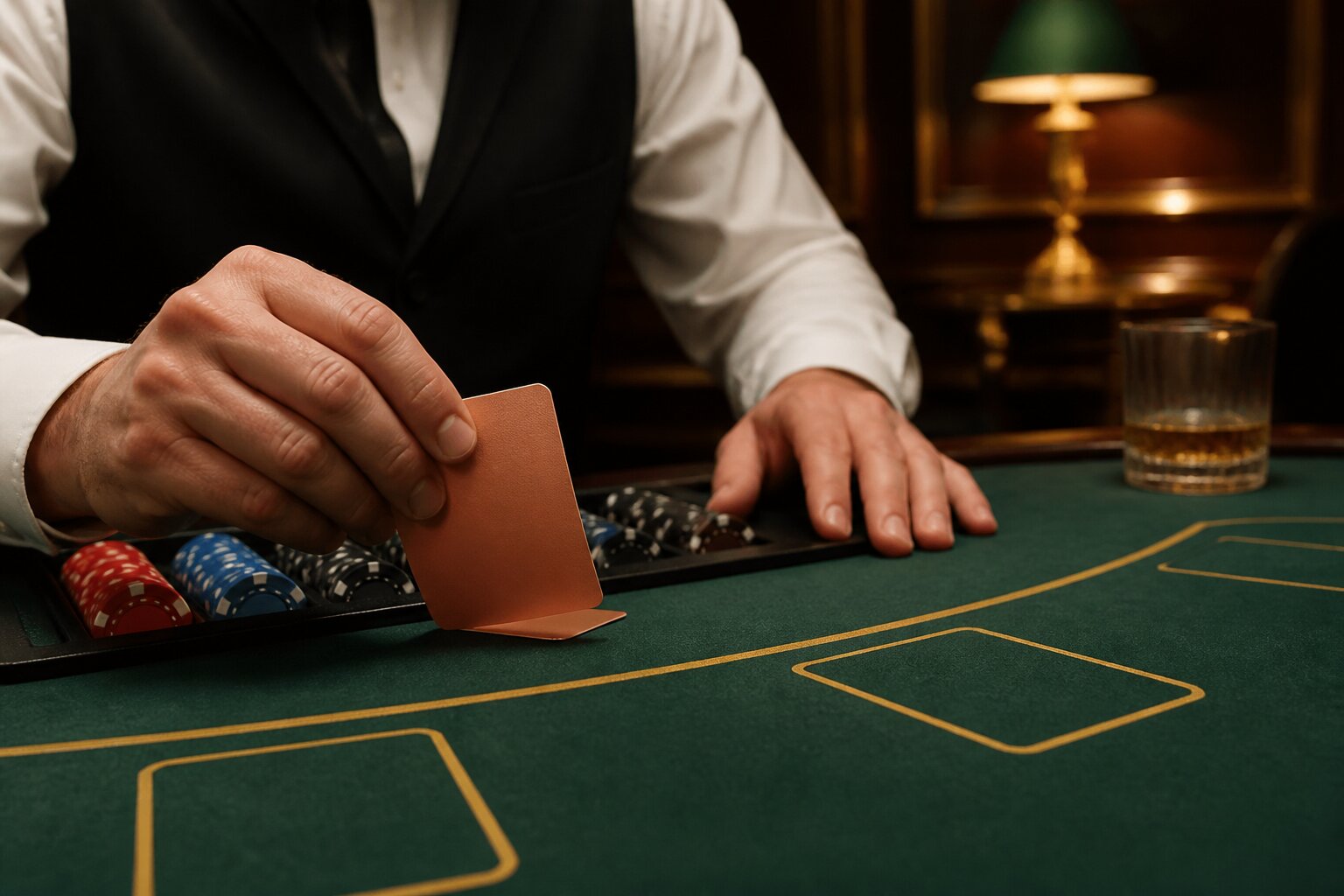
Ever been dealt a hand that feels impossible to win and wished you could cut your losses? The surrender rule gives you that choice: to forfeit half your stake and end the round rather than play on.
Many players overlook this option, but when used selectively it can reduce losses over time. Read on to learn what surrender means, when it appears at the table and how to decide whether it’s the best move.
What Is the Surrender Rule in Blackjack?
Surrender is an option offered in some blackjack games that lets a player abandon their hand after the initial deal and lose only half the original bet. It’s a defensive choice intended for hands where the chances of outlasting the dealer are slim.
There are two main forms of surrender. Early surrender allows you to give up before the dealer checks for blackjack; late surrender only permits you to surrender after the dealer checks and does not have blackjack. The difference matters because early surrender can be used even against dealer upcards that might produce immediate blackjack, while late surrender cannot.
Not all games include surrender, and rules vary between tables and providers. If the option is available it will usually be shown on the layout or in the game rules, so it’s worth checking before you play. Understanding this rule sets up a clearer comparison with the other choices you’ll have on a hand.
How Does Surrender Compare to Other Player Options?
Surrender sits alongside the familiar choices of stand, hit, double down and split, but it serves a different purpose. Rather than trying to improve or extend the hand, surrender ends it immediately and accepts a partial loss.
Standing keeps your current total and waits to see the dealer’s result; hitting risks drawing another card to improve the hand but also risks busting. Doubling down increases the stake in pursuit of a stronger finish, and splitting turns a pair into two hands to play independently. Each of those moves aims to win the hand or increase potential reward, while surrender is explicitly about limiting loss.
Knowing how surrender contrasts with these options helps you pick the right response in tough spots. With that in mind, it’s useful to consider which specific situations make surrender the more sensible choice.
When Should You Consider Surrendering in Blackjack?
Surrender is most valuable when a player’s hand has a low chance of beating the dealer’s visible card. Common examples where surrender is often recommended include holding a hard 16 against a dealer 9, 10 or Ace, and a hard 15 versus a dealer 10. In those scenarios, playing on tends to lose more often than not, so accepting half the bet can be the mathematically sound option.
Decisions can change with specific house rules and the exact composition of the hand (for instance, whether a 16 is made of a pair or multiple cards), so it’s not a one-size-fits-all rule. The key idea is that surrender is for rare, unfavourable situations rather than a routine move.
Next, it’s helpful to know whether surrender will actually be offered where you’re playing, since availability varies.
Is Surrender Always Available at UK Casinos?
Surrender is not universal; many blackjack variants omit it entirely. Some games include late surrender only, while a few offer early surrender. The presence of the option depends on the specific table rules rather than on a casino as a whole.
Before you sit down or load a game, look for the rules or paytable that list allowed plays. In digital games, a surrender button or on-screen prompt will usually indicate the feature. Knowing whether surrender is available prevents surprises and lets you plan strategy appropriately.
If the game does offer surrender, the next two subsections explain the two main ways it may be implemented.
Types of Surrender: Early vs Late Surrender
Surrender comes in two forms that determine timing and value. Each form affects your options and potential loss differently, so knowing which one the table offers is important for sound decision making.
Early Surrender: What Does It Mean?
Early surrender permits forfeiting half the bet before the dealer checks for blackjack. The key point is that you can give up half your wager even when the dealer’s upcard might be part of a blackjack, which reduces your exposure on hands with especially poor prospects.
Because the player retains that option regardless of the dealer’s upcard, early surrender is a stronger concession than the late option and therefore is rarely offered. Casinos that do allow it typically charge for the advantage in other ways, such as less favourable rules elsewhere on the table.
Late Surrender: How Does It Differ?
Late surrender is the more common form and only becomes available after the dealer checks for blackjack and confirms they do not have it. If the dealer does have blackjack, surrender cannot be used and the hand is settled according to the usual blackjack payouts.
Late surrender still offers a useful way to limit losses in certain matchups, but its utility depends on that initial dealer check. Because the dealer may reveal a blackjack before you can act, late surrender is less valuable than early surrender, so basic strategy adjustments for surrender differ between the two. Understanding which type is in play will shape whether surrender is worth using in any given hand. That leads naturally to clearing up some frequent misunderstandings about the rule.
Common Misconceptions About Surrender in Blackjack
There are a few persistent myths that cloud how players approach surrender. One is that surrender is always available; it is not. Another is that surrender should be used any time a hand feels weak; in reality it’s suited to a narrow set of situations where the odds are clearly unfavourable. A further misconception is that surrender guarantees better long‑term results—while it can reduce losses in specific spots, it doesn’t eliminate the house edge.
Surrender is also sometimes mistaken for a tool to “recover” earlier losses. It’s simply an option to reduce the cost of a particular bad hand and should be treated as part of an overall strategy rather than a remedy for previous play. With these clarifications in mind, the final section summarises the practical points to take away.
Key Takeaways for Using Surrender Effectively
Surrender is a defensive option that can reduce losses in rare but unfavourable hands. Its usefulness depends on whether the game offers early or late surrender and on the specific dealer upcard and your hand composition. Use it sparingly, in situations where the odds are clearly stacked against the player.
Always check the game rules to confirm surrender is available and which form is used. Treat surrender as one tool among several: when the maths favours limiting loss, it can be the sensible choice. Play within your limits and make informed decisions—knowing the rules and their effects will help you control risk without relying on assumptions.
Surrender won’t change every outcome, but when applied correctly it helps manage downside on those hands that are most likely to lose.
**The information provided in this blog is intended for educational purposes and should not be construed as betting advice or a guarantee of success. Always gamble responsibly.