
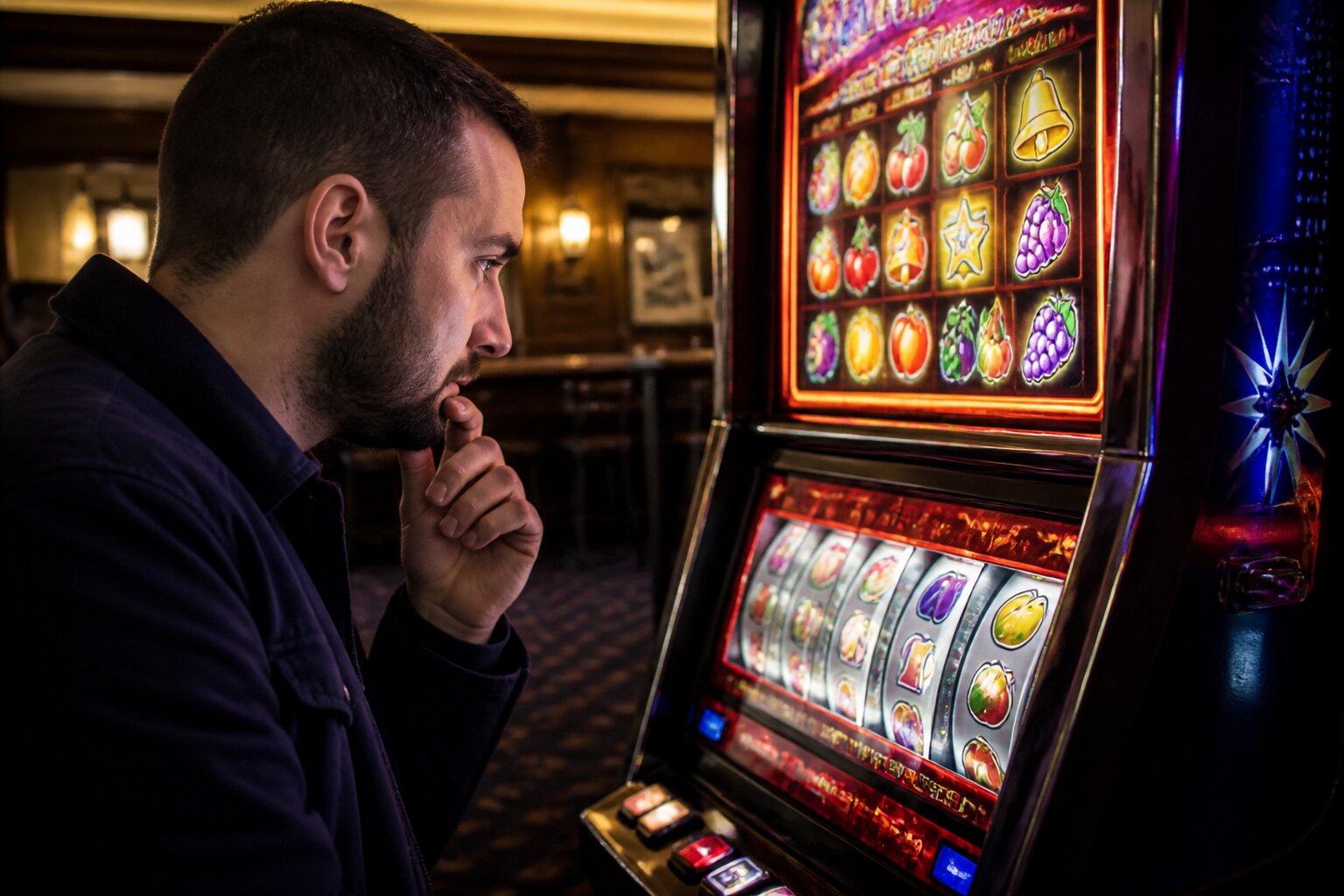
Ever found yourself staring at a fruit machine, wondering if it’s about to spill out a jackpot? You’ve probably heard stories about “hot” machines or seen someone waiting by a particular game, convinced a big win is imminent.
It’s tempting to look for patterns that might tip you off when a payout is coming. But before you spend another pound chasing a theory, it helps to understand how these machines actually operate.
Read on to separate myth from fact and see how knowing the mechanics can change the way you play.
How Do Fruit Machines Really Work?
Fruit machines, whether in a venue or online, rely on a computer programme called a Random Number Generator (RNG). The RNG produces the sequence that determines where the reels stop, and it makes each spin an independent event. In practical terms, the machine does not track past spins or build toward a future payout.
Regulation ensures this independence. In the UK, machines must meet standards set by the Gambling Commission and are regularly tested by independent bodies to confirm they behave as designed. That testing checks the RNG and the overall game logic so players can expect consistent, impartial outcomes.
Because results are produced by the RNG and checked by testers, there are no mechanical signals or reliable behavioural patterns that let you predict a win. Understanding that clears up a lot of the folklore around “due” payouts and switching between machines.
What Is a Fruit Machine’s Random Number Generator?
The RNG is the core technology behind every modern fruit machine. If the previous section outlined why spins are independent, here we look more closely at how that independence works.
An RNG continually generates streams of numbers. When you press the spin button, the machine reads the current number and translates it into a reel position. This process happens so fast that what you press has no meaningful effect on the sequence the RNG produces. Because of this design, the outcome on one spin is not influenced by earlier or later spins.
Independent testing labs examine RNG output and verify that results match the advertised return-to-player (RTP) figures and comply with regulatory standards. Those checks help ensure the game’s mathematics and the randomness of outcomes are consistent with legal requirements.
If you want to assess a game, looking for published RTP figures and independent test certificates is a more reliable indicator of fairness than trying to interpret patterns on the machine itself.
Can Payout Patterns Be Predicted?
People often try to infer patterns from recent results, but the technical setup makes prediction impossible. The RNG ensures that every spin’s result is independent, so trends seen on a screen are simply a sequence of unrelated events.
Some players interpret a run of small wins or a long dry spell as a meaningful pattern. Statistically, such runs can and do occur by chance in truly random processes, but they do not signal that a particular outcome is more likely next. Claims about timing spins or using “systems” to increase your chance at a payout do not hold up against how the machines are built and tested.
Instead of hunting for patterns, a clearer route is to check the game’s RTP and volatility information. These figures describe the long-term behaviour of the game — how often wins of various sizes tend to occur — and are rooted in the game’s mathematical design rather than short-term sequences.
Common Myths About Fruit Machine Payouts
There are many familiar myths that keep circulating. One is that a machine becomes “ready to pay” after a losing stretch; another is that a machine can be identified as “lucky” because someone recently won on it. Because the RNG governs outcomes and independent testing ensures compliance, neither idea is supported by how the machines operate.
Another misconception is that skill, timing, or secret techniques can influence results. Modern fruit machines do not allow meaningful player skill to change the outcome of a spin, so these ideas are misleading. If you come across claims that certain behaviours will increase your chances, treat them sceptically and look for the game’s documented specifications instead.
Clearing up these myths helps you focus on information that actually matters: the game’s RTP, its volatility, and whether the operator provides clear regulatory and testing information.
Is There a Way to Spot a Machine That Is “Due”?
Short answer: no. Because each spin is independent and governed by the RNG, past results offer no reliable insight into what will happen next. Machines don’t keep score of recent outcomes in any way that affects future spins, and there are no external signs to indicate a machine is approaching a payout.
Rather than attempting to identify a “due” machine, you’ll get more useful context from the game’s published statistics and testing certificates. Those sources tell you how the game behaves over time and whether it has been independently verified for fairness.
If you notice local practices—such as venues displaying information about game configurations or posting test certificates—use those as the basis for decisions, rather than anecdote or observation of past spins.
How to Identify Legal and Fair Fruit Machines
To be confident a machine is legal and fair, look for clear licensing and testing information. Regulated operators make licence details readily available, and independent testing agencies publish certificates confirming that individual games meet their stated RTP and randomness standards.
In a venue, this information may be displayed on signage or on the machine itself. Online operators usually include licence details and links to testing reports on their website. These documents show that the game has been evaluated against regulatory requirements and independent technical standards.
Avoid machines or sites that do not present this information transparently. Choosing games with visible licences and testing reports gives you assurance that the outcomes are being monitored by independent organisations.
What Are the Responsible Gambling Guidelines?
Playing should remain a controlled, informed choice. Responsible gambling principles help you keep play enjoyable and within clear boundaries, rather than allowing it to become a source of harm.
Start by setting clear financial and time limits you are comfortable with, and make decisions about those limits before you begin. Treat any money spent on machines as the cost of entertainment, and avoid using funds needed for essential bills or commitments. If play becomes stressful, intrusive, or harder to manage, there are confidential support services available that can offer guidance and practical tools.
It is also important to use available safeguards: many operators provide deposit limits, session reminders, and self-exclusion options. These measures exist to help maintain control over play and to protect people who may be vulnerable.
We support sensible play and the use of tools and services that keep gambling within safe boundaries. If you ever feel your gambling is causing difficulties, seek help early from a support organisation.
Always play within your means and with clear limits in place.
**The information provided in this blog is intended for educational purposes and should not be construed as betting advice or a guarantee of success. Always gamble responsibly.