
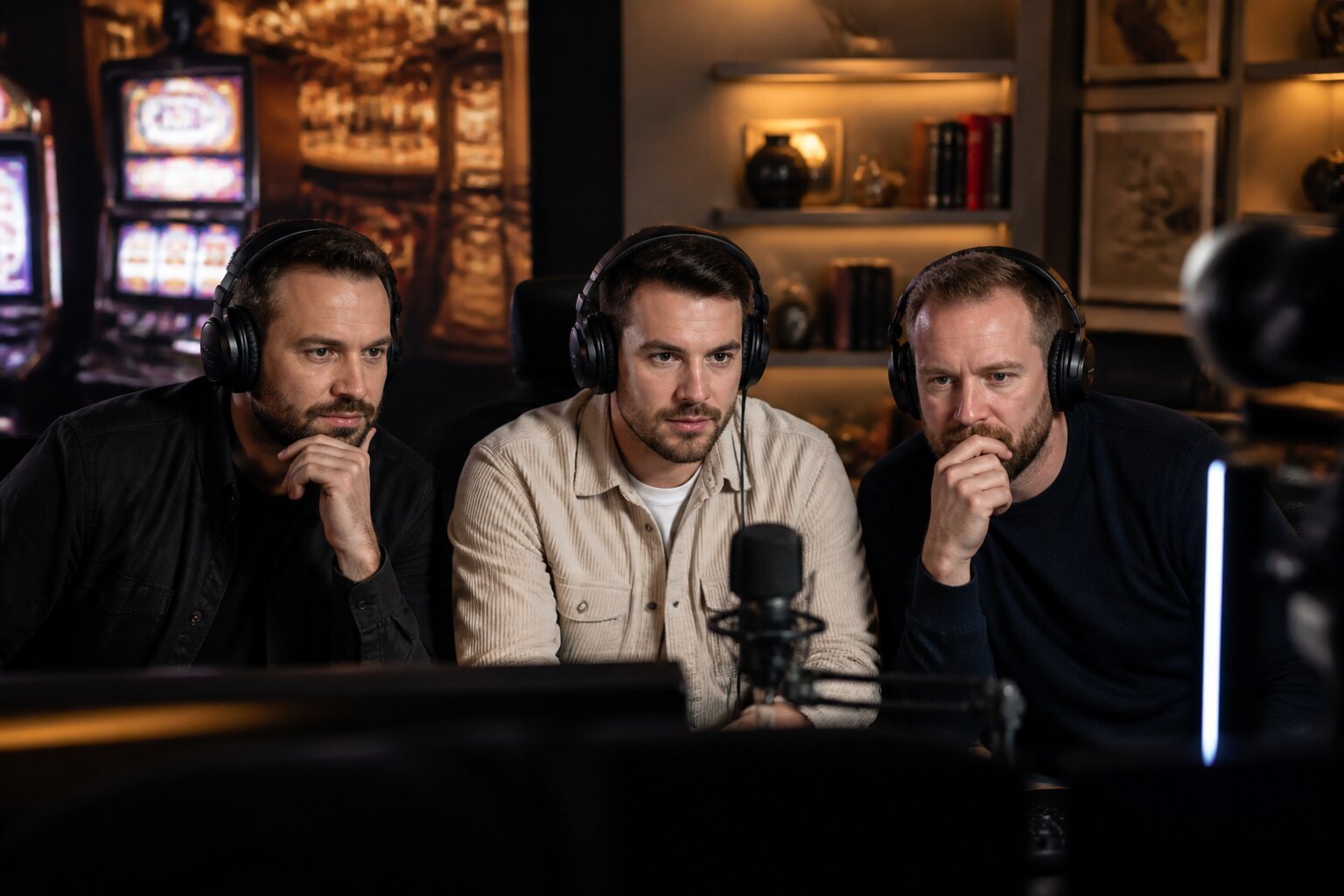
Ever wondered how three brothers from southern Sweden turned a passion for slots into marathon streaming sessions that pull in hundreds of thousands of viewers? Picture late-night spins, headline moments on-screen and a chemistry so tight it feels like you’re hanging out with family.
There’s something magnetic about the way Anton “Ante”, Erik “Ebro” and Mathias “Masse” Joelsson bounce off each other—each brings a different vibe, from Ante’s playful rebellion to Masse’s calm, seasoned energy and Ebro’s occasional surprise appearances.
Let’s unravel what’s grounded in reality and what’s been exaggerated, starting with who they are and how they operate.
Who Are the CasinoDaddy Streamers?
Here’s a clear and straightforward look at who they are, no fluff, just the essentials.
Anton, Erik and Mathias Joelsson are the trio behind the CasinoDaddy brand. Known as Ante, Ebro and Masse on screen, they are brothers from Kristianstad in southern Sweden.
Mathias, or Masse, is the oldest and handles a large part of the business while still appearing on stream. Anton, Ante, brings a rowdier on-screen personality, and Erik, Ebro, is the youngest who pops in regularly with a distinct energy. Each plays a specific role in the content and the company side of the operation.
Their different styles are part of the appeal and set the tone for the streaming format discussed next.
What Platforms Do They Stream On?
Here’s a quick, clear look at where the trio streams and what that means for viewers.
They broadcast long-form slot sessions live on Twitch and Kick, while YouTube acts as an archive for highlights, big-payout clips and recap videos. Live streams tend to be longer and include real-time interaction with chat, whereas YouTube clips are edited down for pace and to showcase the most notable moments. This multi-platform presence lets fans catch live action or revisit key moments later, depending on how they prefer to watch.
These platforms require viewers to be 18 or over, and streams are subject to the platforms’ rules. Age gates, channel moderation and platform-based content policies control how gambling content is presented and who can see it. Some videos may also be geoblocked or subject to different rules in different countries.
Platform policies and commercial arrangements also influence the streams. Advertising, sponsorship and platform monetisation tools shape what is shown and how often promotional messages appear, which in turn affects the audience experience and the creators’ business model. Responsible gambling messaging and moderation are commonly used to meet regulatory expectations and platform requirements.
What Is Their Streaming Schedule Like?
Here’s a crisp look at what their streaming rhythm actually looks like.
They typically stream daily, often starting between 7 and 10 a.m. Central European Time (CET) and continuing well into the evening, sometimes past 11 p.m. Sessions commonly extend beyond ten hours, with many hitting 14 hours or more during busy periods. The hosts rotate through shifts to sustain the channel across the day.
On Twitch, the channel frequently accumulates around 391 hours of live streaming in a month, which averages to more than 13 hours per day. Kick shows a similar pattern, with monthly airtime often comparable. These numbers are averages rather than fixed schedules, so individual streams will vary.
Longer broadcasts create more content for highlights and keep viewers engaged over many hours, but they do not change the underlying probabilities of any given outcome. That distinction is important when we look at typical stream lengths next.
How Long Are Their Streams Typically?
Here’s how long their streams usually run and why those durations matter.
While headlines often reference marathon 14-hour days, deeper metrics show average stream lengths closer to 12–13 hours. Twitch analytics for recent months indicate an average of about 12 hours and 20 minutes per stream, and Kick’s totals produce a similar daily average when viewed across a month.
Not every session matches that average: some streams are nearer ten hours, others extend later into the night. The extended format supports varied content—live bonus hunts, commentary, guest appearances and highlightable moments—which is why airtime matters as much for production as for viewership.
Understanding typical durations helps set realistic expectations about the pace and the type of content viewers encounter next, including the standout wins that get the most attention.
The biggest verified payouts include
Here is a clear, no-nonsense breakdown of some of CasinoDaddy’s most notable verified payouts—these are exceptional results, not typical returns.
• Starlight Princess 1000, approximately $505,900 on a $100 bet, from a 5,059× multiplier.
• Roman Bonanza, around $160,000 on a $100 bet, from a 1,600× multiplier.
• Mad Cars, a 25,000× multiplier turning a $1.20 stake into about $30,000.
These outcomes were tracked during live sessions and presented transparently in the streams and accompanying clips. They serve as illustrative examples of the extremes the show highlights.
Other standout high‑multiplier moments showcased in their highlight reels include
• Sugar Rush 1000, an 18,221× hit that would equate to roughly €18,000 on a €1 stake.
• Top Dawgs, showing a 25,000× maximum win from Relax Gaming.
• Sloth Tumble, a 60,277× maximum-win multiplier from a studio in which the group has a financial interest.
These sequences are rare and not representative of typical play. Next, a few large bonus-buy jackpots from affiliate sources demonstrate the highest ends of what has been recorded.
Spontaneous Euro-ticket jackpots from affiliate sources highlight additional peaks
• Nitropolis 3 — €900,915 via a bonus-buy spin.
• Dork Unit — €668,080 from a high-stakes bonus round.
• San Quentin — €569,204 in a near max‑win payout.
• Sloth Tumble — €521,233 in a bonus session.
• Zeus vs Hades: Gods of War — €400,350 from a bonus buy.
These figures are exceptional cases and should be viewed as rare outcomes with low probability. The next section looks at how their brand translates into business value rather than on-screen payouts.
What Is CasinoDaddy’s Net Worth or Brand Value?
Here’s a grounded view of the brand’s value, focusing on verifiable business context.
Joelsson Media Holding AB, the family company running the operation, reported roughly $5 million in revenue in 2019. The wider enterprise—combining streaming, affiliate marketing and a slot studio—has been estimated by industry observers to sit in the low eight-figure range in terms of overall business revenue. Those are company-level figures rather than personal net worth for the brothers.
Publicly available information does not disclose the brothers’ personal wealth, so most headline valuations are estimates. Their revenue mix includes affiliate commissions, content monetisation and studio income, which together constitute the business model.
This commercial picture clarifies that the visible on-screen results are only one part of a larger, structured media operation. That distinction helps explain the pairings with other brands discussed next.
How Is CasinoDaddy Affiliated with AboutSlots?
Here’s a clear breakdown of the connection between CasinoDaddy and AboutSlots so the relationship is easy to understand.
Both sit under the Joelsson Media Group umbrella. AboutSlots functions as an affiliate site offering reviews, guides and editorial content, while CasinoDaddy supplies live-streamed slot entertainment and promotional activity. The two operations share ownership and strategic goals, which means content and promotional activity often cross over.
That relationship allows AboutSlots to publish detailed editorial content tied to the streams, and it enables CasinoDaddy to drive engaged viewers toward reviews or offers hosted on the affiliate site. The arrangement is internal and complementary, combining entertainment and informational services within the same corporate structure.
This linkage explains how on-screen moments can support broader commercial activity, which brings us to a final assessment of what really matters when watching or following the channel.
The Bottom Line: Insights on the CasinoDaddy Trio
Here’s a measured wrap-up: what stands out, what to discount, and how to take the content in context.
The Joelsson brothers have built a recognisable media operation rooted in long-form slot streaming, multi-platform publishing and affiliate activity. Their on-screen personalities and marathon schedules generate content that attracts large audiences, and their biggest payouts make for compelling highlights. Those headline moments are rare and should be treated as extreme examples rather than expectations.
Their business earnings are largely driven by a combination of affiliate revenue, content monetisation and studio activity rather than on-screen wins alone. Knowing that helps separate spectacle from business reality.
Enjoy the streams for the personalities and production values, and be mindful of personal boundaries when engaging with gambling content. Set clear personal limits, take breaks and make decisions that fit your financial situation. With that perspective, the channel plays as entertainment first and foremost, and the viewing experience stays sustainable and enjoyable.
**The information provided in this blog is intended for educational purposes and should not be construed as betting advice or a guarantee of success. Always gamble responsibly.