
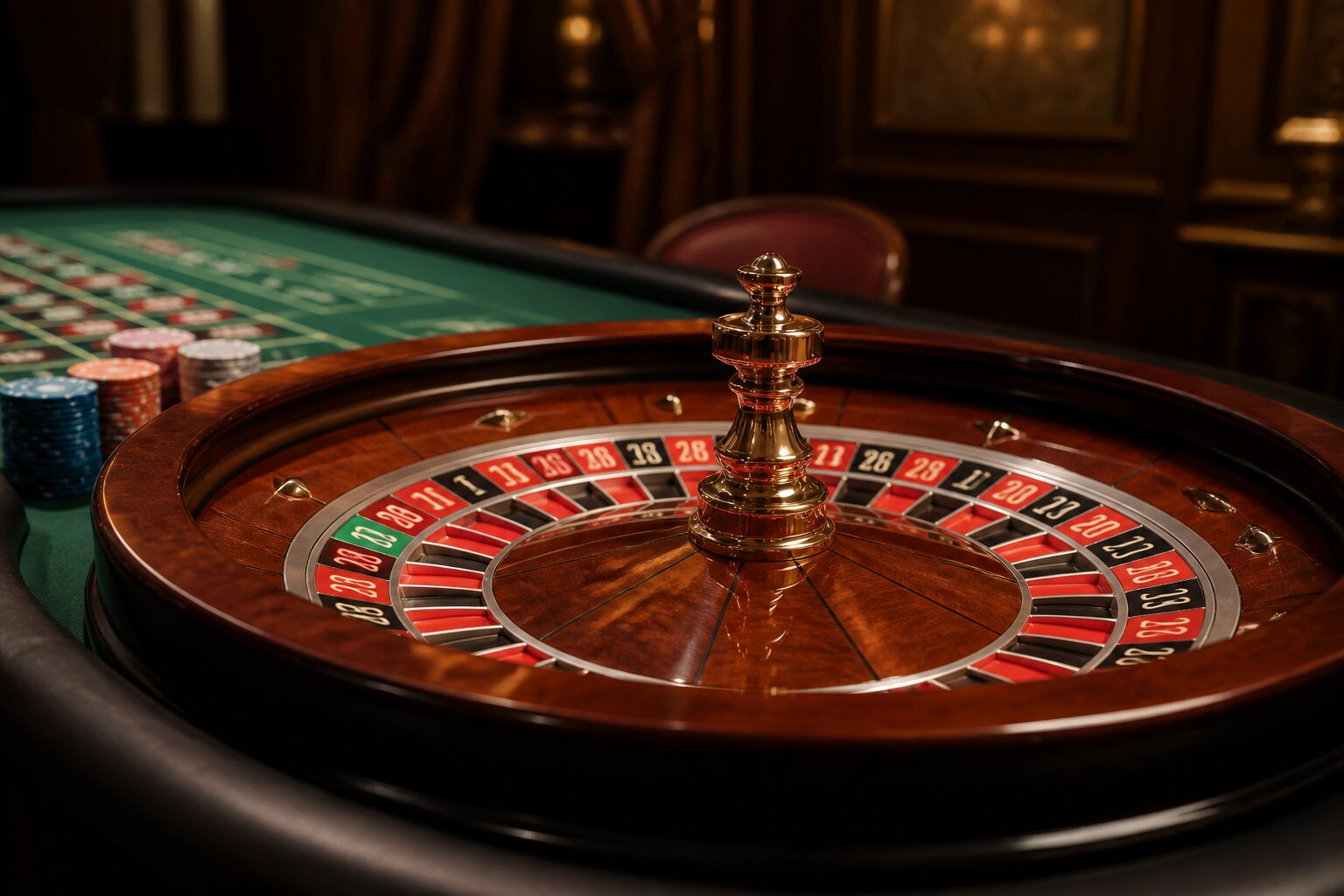
Whether you’re a complete beginner or someone who’s watched the wheel spin on a casino night, you’ve probably wondered how many numbers are actually on a roulette wheel. The question seems simple at first, but different versions of the game change the count and the way the wheel plays.
Understanding what’s on the wheel helps you follow the game with more confidence and makes it easier to compare variants. Let’s take a clear look at the differences and what they mean for how the game plays out.
What Is the Difference Between European and American Roulette Wheels?
The key distinction is the number of green zero pockets. European roulette features a single zero (0), giving a total of 37 numbered pockets: 1–36 plus the solitary green zero. Many players prefer this version because that single zero produces a lower house advantage compared with the American layout.
American roulette adds a double zero (00) alongside the single zero, so the wheel contains 38 pockets in total. That extra pocket alters the payout calculations and slightly increases the house edge for ordinary bets. The difference is straightforward to spot on the wheel, and it affects the mathematical odds behind the table, not the mechanics of spinning.
Both variants use the same red and black colouring for numbers 1–36 and keep the zero pockets green. If you’re deciding which version to watch or try, knowing this difference is the simplest and most useful place to start.
How Are the Numbers Arranged on a Roulette Wheel?
Roulette numbers are not placed in numerical order around the rim. Instead, the layout was designed to spread high and low numbers, odd and even numbers, and the colours so they are balanced and mixed as the wheel turns.
On the single-zero wheel the sequence alternates red and black around the circle, with the green zero set apart. The positions aim to avoid clusters of similar numbers or colours appearing next to each other. The double-zero wheel keeps a similar intention but changes the exact order to accommodate the extra green pocket, so the distribution differs from the European pattern.
This arrangement influences how the wheel looks and helps create varied outcomes from spin to spin. Knowing the layout won’t predict results, but it does explain why numbers of different types often sit near one another.
Now that you understand how the wheel is put together, it helps to know what the colours and symbols actually signify.
What Do the Colours and Symbols Mean?
The colours are a quick visual guide to the basic betting options. Numbers 1–36 are split evenly between red and black, which allows bets to be placed on colour as an alternative to betting on a single number. The greens indicate the zero pockets and are treated separately from red and black.
In single-zero roulette there is one green pocket marked 0; in double-zero roulette there are two green pockets marked 0 and 00. These green pockets are not classed as red or black and they affect certain bets: when the ball lands in a green pocket, many even-money bets do not win. That’s the simple way those pockets change the payout structure.
Colours make the table easier to read and give players a range of straightforward bet types, from single-number stakes to colour-based bets. They are part of the game’s design rather than a signal of any pattern or bias.
Why Does Roulette Have Zero and Double Zero?
The zeros are central to the maths of roulette. Because standard bets lose when the ball lands in a green pocket, the presence of one or two zeros creates the built-in advantage that allows casinos to operate the game over the long run.
Single-zero wheels produce a smaller built-in advantage than wheels with a double zero. That difference alters the expected return for players, which is why some players prefer the single-zero version when given the choice. The zeros also define specific betting rules and payout tables, so knowing how many zeros are on a wheel helps you understand the underlying probabilities.
These pockets are a structural feature of the game and determine how payouts are calculated rather than being a reflection of how the wheel performs in practice.
Can Roulette Wheels Have Different Numbers or Slots?
Beyond the standard single-zero and double-zero wheels, there are novelty and themed versions that modify rules, add side games, or present alternative layouts. Such variants are often seen in entertainment settings or digital platforms and usually come with clear rules explaining how the altered wheel affects betting and payouts.
Where the game is offered under regulated conditions, the number of pockets and the rules will be stated clearly so players know what to expect. Any deviation from the classic layouts changes the mathematics of bets, so the differences are always explained before play begins.
If you encounter a version that looks unfamiliar, check the rules for how many green pockets exist and how that affects winning bets.
Common Myths About Roulette Wheels Explained
Roulette attracts stories, so it helps to separate fact from fiction. The most persistent myths concern rigging, favoured numbers and systems that guarantee wins.
Myth: Wheels Are Rigged to Favour the House
Licensed games are subject to independent testing and oversight to ensure they meet fairness standards. The house advantage comes from the rules of the game—specifically the green pockets—not from manipulation of the wheel.
Myth: Certain Numbers Are More Likely to Land
In a properly maintained wheel that meets regulatory checks, every pocket has the same theoretical chance on any given spin. Maintenance, monitoring and testing are all used to maintain that standard.
Myth: Betting Systems Can Predict Outcomes
Betting Systems that claim to beat the wheel rely on patterns that don’t exist in regulated play. No strategy can change the mathematical structure created by the number of pockets and the payout rules.
If you want to explore the game further, remember to check each game’s rules and payouts and paytables before placing a bet; those explain how payouts are calculated and how the zeros affect different bet types. If you need support managing play, tools and advice are available to help you stay within your limits.
**The information provided in this blog is intended for educational purposes and should not be construed as betting advice or a guarantee of success. Always gamble responsibly.