
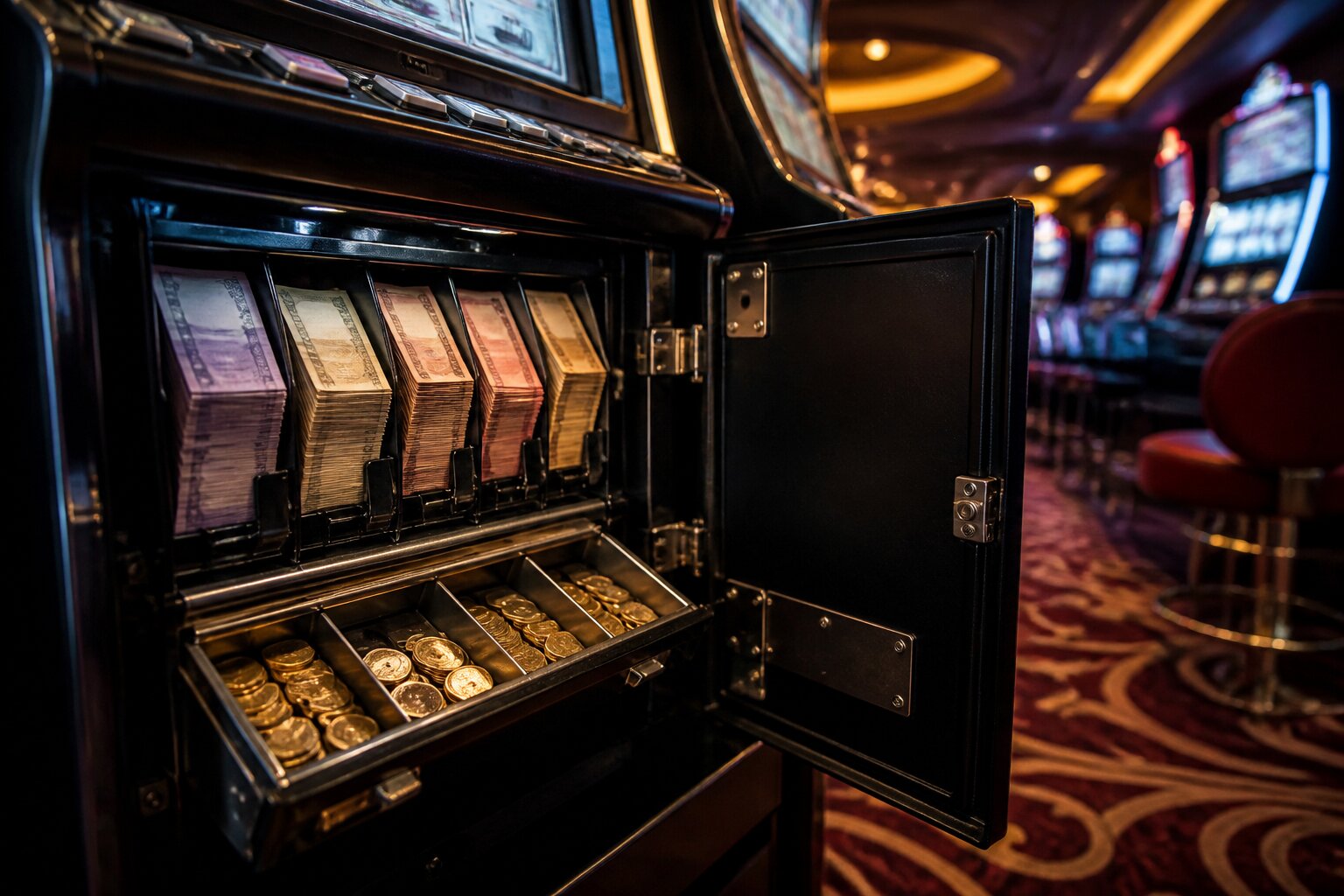
Have you ever wondered just how much money is inside a slot machine at any given time? It’s a common question for people who play occasionally and for regulars alike.
Slot machines look simple from the outside, but inside there’s a system that manages notes, coins and digital credits while keeping cash secure and operations smooth. How much a machine can hold depends on design, the venue’s needs and legal requirements.
Read on to learn what determines a machine’s cash capacity, how money is stored and moved, and what safeguards are in place to protect both players and operators.
What Determines the Cash Capacity of a Slot Machine?
Several practical and regulatory factors work together to set how much cash a machine can carry.
Machine Design
Manufacturers plan internal space carefully to balance capacity, security and reliability. Cabinets are engineered so components sit securely and where they are accessible for servicing without compromising safety.
Cabinets contain a number of distinct parts:
- bill validators used to accept and authenticate notes
- secure cash boxes that collect and hold paper money
- coin hoppers where coins are accepted and dispensed, in machines that take coins
Each of these components has a rated capacity, and the physical layout of the cabinet limits how much can be installed. Modern cash boxes are designed to be compact but robust, with manufacturers often choosing materials and locks that reduce the risk of theft while keeping the box easy to handle during collections.
Operating Environment
A venue’s level of traffic affects capacity decisions. High-footfall locations normally use machines with larger storage or arrange more frequent collections to reduce the amount of cash sitting in the machine at any one time.
Quieter venues can operate with smaller capacity and less frequent servicing, which can reduce costs. The operating schedule also influences how often machines are checked, refilled and reconciled, and staffing levels determine how quickly any issues can be dealt with.
Legal Restrictions
Regulations set by the UK Gambling Commission require machines and operators to meet standards for security, record keeping and cash handling. These standards influence both design and operational practice, ensuring machines do not become an unnecessary risk by holding excessive amounts of cash.
Regulatory requirements typically include:
- secure storage and tamper-evident fittings
- accurate transaction records and reporting procedures
- staff training and vetting for those handling cash
Together these elements ensure a machine’s capacity is practical, secure and compliant with the rules operators must follow.
Where Is Money Stored Inside a Slot Machine?
The interior of a slot machine is arranged to separate and secure different types of cash items. Components are designed so each kind of value is stored separately, making it easier to account for and protect funds.
Typical cash and value elements inside machines include:
- banknotes accepted by the note validator
- coins held in the hopper
- ticket vouchers produced by ticket-in, ticket-out systems
- electronic credit records where machines operate cashless systems
Cash Boxes
Notes inserted by players are routed into a locked metal cash box within the cabinet. These boxes are tamper-resistant and are secured with locks and seals to prevent unauthorised access.
Boxes are removed only by authorised staff during supervised collections, and each removal is logged. The logs form a clear audit trail that links the machine to the cash handling facility, helping ensure accountability and traceability.
Coin Hoppers
Machines that still accept coins have a dedicated hopper. This stores coins used for play and pays out coin-based winnings when required.
Hoppers are engineered to reduce jams and to regulate payouts consistently. Access to the hopper is controlled and usually requires specific tools or keys, with procedures in place for safe removal and replenishment.
Security Features
Storage areas are protected by a combination of physical and electronic measures:
- keyed locks and sealed access points
- alarm systems that trigger on unauthorised opening
- sensors that detect tampering or unusual activity
- CCTV monitoring in many venues
Staff access is limited to trained personnel and is governed by documented procedures. Records are maintained for every stage of access, from routine checks to full cash collections, supporting regular audits and regulatory compliance.
These layers of design and control keep the cash and value records inside machines protected and traceable, while supporting the operational and regulatory requirements of licensed premises.
How Do Casinos Refill and Empty Slot Machines?
Handling cash in and out of machines is a structured process focused on accountability and minimizing risk.
Emptying Cash
Collections are performed by trained teams working together so that no single person has unsupervised access. Two-person teams or supervised collections are common to ensure checks and balances at every stage.
Cash boxes and coin hoppers are removed, sealed and counted according to established protocols. Seals and tamper-evident bags are used so any interference is obvious, and every removal is documented with time, personnel and machine identifiers.
Counts are reconciled against machine meters and electronic records to reduce the risk of error and to support clear financial records for the venue. Any discrepancies are investigated immediately and logged for audit purposes.
Refilling Machines
When machines need more change or note supplies for payouts, authorised staff carry out refills using the same controlled approach. Staff use sealed containers and verify float levels before and after the refill to ensure accuracy.
Refill events are recorded and seals are checked to confirm integrity before a machine returns to service. Where appropriate, staff will also check machine meters and test a small payout to confirm the machine is operating correctly.
Following the Rules
All these activities take place under the oversight required by regulation. Operators maintain detailed logs, perform regular internal and external audits and ensure staff training is kept up to date so that every movement of cash is transparent and compliant.
Additional safeguards commonly used include:
- CCTV coverage of collection and refill areas to provide an independent record
- Clear chain of custody procedures that name responsible staff members
- Regular reconciliation routines to match physical cash with electronic accounting
This careful handling keeps machines operational while maintaining the security of collected funds and meeting regulatory expectations.
Are There Maximum Payout Limits on Slot Machines?
Machines have defined payout limits that are part of their technical design and regulatory oversight.
Manufacturers set maximum payout values during development and these are built into the machine’s software. The equipment also contains certified random number generation systems and controls to ensure payouts conform to those programmed limits. Operators and regulators verify those settings during inspections.
Payout limits vary between games, reflecting factors such as game type, denomination and the machine’s intended market. Information about maximum payouts is usually available to players through on-screen help or venue information, providing transparency about the scale of possible winnings.
These limits are enforced by both the machine’s internal programming and routine checks by operators and regulators, so payouts remain within the declared parameters.
What Happens If a Slot Machine Reaches Its Cash Limit?
When a machine approaches its storage limit, procedures are triggered to prevent disruption and keep handling secure. These measures aim to protect players, staff and the integrity of the venue’s operations.
Automatic Alerts
Sensors and monitoring systems notify staff when cash boxes or hoppers near capacity. This early warning lets teams plan a collection before the limit is reached, reducing the risk of sudden interruptions to play.
The alert systems are designed to integrate with venue workflows so that collections can be scheduled at convenient times, helping to keep queues and payouts running smoothly without unnecessary delay.
Temporary Out of Service
If a machine reaches its limit, it may lock and display an out-of-service message. This prevents further play until staff have dealt with the cash storage, avoiding situations where payouts cannot be honoured or where the machine could malfunction.
Staff only return the machine to use once the required tasks and checks are complete, ensuring players are not exposed to errors or delays when the machine resumes operation.
Secure Handling
At that point, authorised personnel follow the venue’s established procedures to remove and record the cash, verify counts and reseal the machine. These steps are carried out in a controlled way to maintain chain of custody and accurate records.
Typical elements of the process include:
- removing and securely transporting the cash containers,
- recording amounts and logging the action in the venue’s systems,
- verifying counts and reconciling against transaction records,
- resealing and testing the machine, and
- completing any required paperwork before returning the machine to service.
Only once all checks and documentation are complete is the machine returned to normal operation. These steps maintain continuity while protecting the integrity of both funds and the game itself.
UK Legal Regulations for Slot Machine Cash Holdings
In the UK, regulations aim to ensure machines operate safely, transparently and with clear accountability. These rules are designed to protect both players and businesses by setting minimum standards for how slot machines are built, managed and audited.
The Gambling Commission sets standards that cover a range of areas, including:
- machine design and technical compliance,
- cash handling procedures,
- record keeping and audit trails,
- staff training and supervision.
Machines must be constructed to meet technical requirements for security and payout controls. They should incorporate tamper-resistant features, accurate meters for tracking play and payouts, and reliable mechanisms to prevent unauthorised access to cash or internal systems.
Operators are responsible for maintaining schedules of inspection and supervised cash movements. This includes regular checks of machines, logging cash collections and ensuring two-person or authorised supervision where required. Clear procedures and documented logs help demonstrate compliance during inspections.
Regulatory oversight includes routine audits and the potential for enforcement action if standards are not met. Inspections may be carried out by the Gambling Commission or by authorised third parties, and failures can result in corrective notices, fines or other sanctions. Together, these rules create a framework that makes cash procedures traceable, consistent and accountable across venues.
Common Myths About Slot Machine Cash Capacity
A few misconceptions persist about how slot machines manage cash. A quick look at the facts helps separate these from reality and keeps expectations realistic.
Myth 1: A Full Machine Is ‘Due’ a Payout
The amount of cash inside a machine has no bearing on when it will pay out. Modern machines use certified random number generators and predefined payout percentages to determine outcomes, not the physical contents of the cash box.
These systems are independently tested and regulated to ensure fairness, so a machine being full does not make it more likely to trigger a win for the next player.
Myth 2: Staff Can Influence When a Machine Pays
Staff are responsible for the secure handling of cash and the routine maintenance of machines, but they do not control game outcomes. Any cash removal or refilling follows strict procedures and audit trails.
The software within the machine governs payouts independently. Authorised personnel can service and secure equipment, but they cannot alter the chance of winning during normal operation.
Myth 3: More Cash Means Bigger Wins
The amount of money stored in a machine is separate from the maximum prize a game can offer. Maximum prizes are set by the game’s configuration and by regulatory limits, not by how much cash happens to be inside the cabinet at any one time.
Progressive jackpots and other linked prize mechanisms are managed through networked systems and rules, not the local cash box.
Clearing up these misunderstandings helps players form realistic views of how machines operate and supports informed decision making.
Why Do Slot Machine Cash Limits Matter to Players?
Cash limits and the systems that enforce them affect the player experience in practical ways.
They contribute to the security of funds and provide a clear audit trail for cash handling, which supports trust in venue operations. Limits also make operational sense: by controlling capacity and scheduling collections, venues reduce the risk of service interruptions and ensure machines are available for players when needed.
From a regulatory perspective, these measures tie into wider protections and accountability that venues must provide. Knowing that cash is managed under strict procedures gives assurance that machines are being operated in a controlled and verifiable way.
**The information provided in this blog is intended for educational purposes and should not be construed as betting advice or a guarantee of success. Always gamble responsibly.