
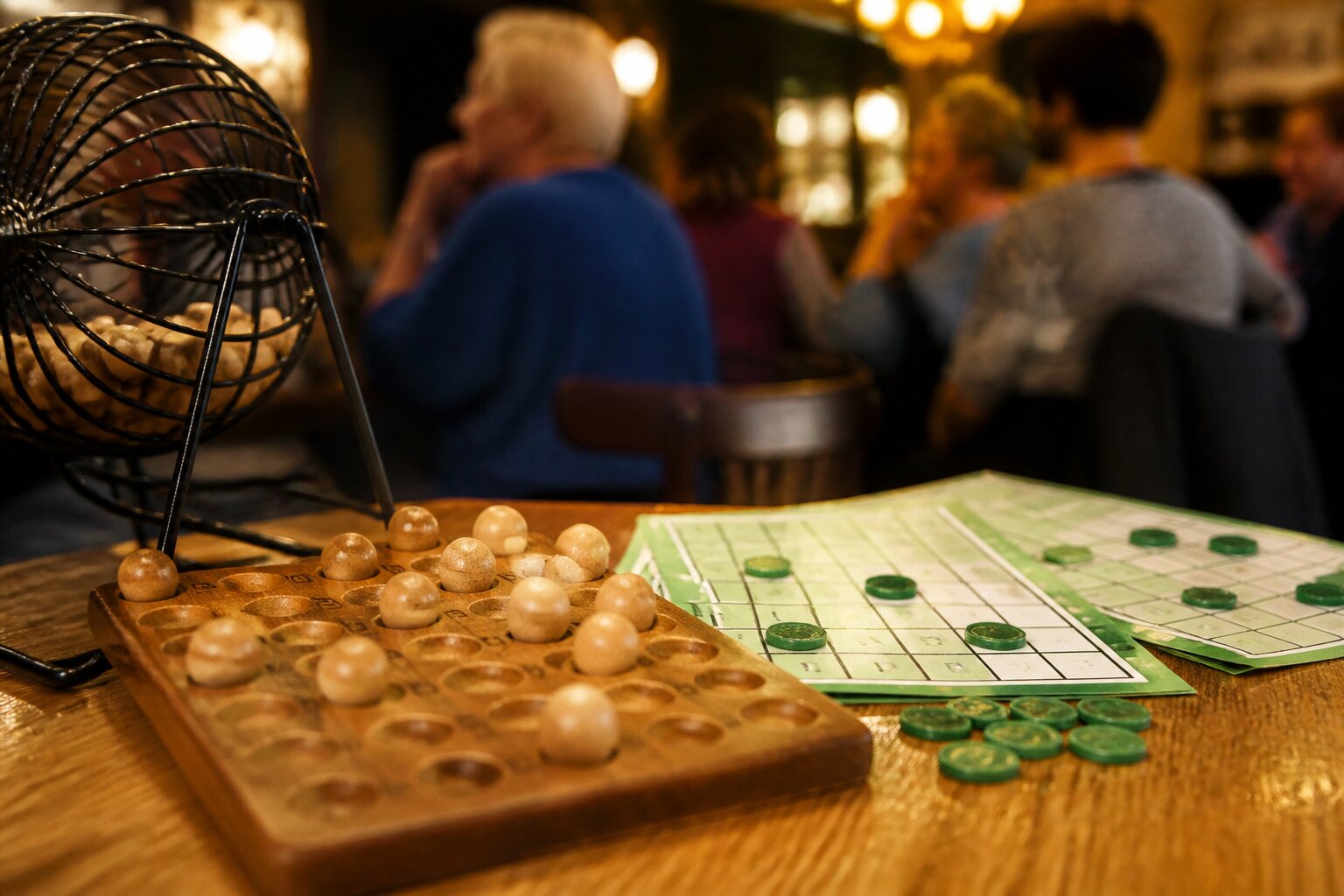
Whether you’re new to bingo or curious about the Irish style, this guide will walk you through what to expect. Irish bingo keeps the familiar 90-ball format but adds a lively social side and a string of memorable calls that give each game its character.
You’ll find clear explanations of the rules, how tickets work, the common calls you might hear, and what happens when someone wins. Read on to pick up the essentials and feel comfortable joining a game in a hall or online.
What Is Irish Bingo?
Irish bingo uses the same basic 90-ball structure seen across the British Isles, but it’s the atmosphere that sets it apart. Games have long been a community activity in halls and later moved online; the calling style and social interaction often make sessions feel more theatrical and chatty than a plain number draw.
The calling often includes rhymes, nicknames and short phrases that help players recognise numbers quickly and add a sense of tradition. Those calls don’t affect the outcome; they serve to keep attention and entertain while the game progresses.
Where regulation matters, this guide refers to games that operate under recognised oversight. That ensures transparent rules and fair play for everyone involved.
How Do You Play Irish Bingo?
Playing Irish bingo is straightforward and social rather than technical. You obtain one or more tickets, each showing a 3x9 grid with 15 numbers spread across three rows. As numbers are announced, you mark any matches on your ticket.
Games commonly award prizes for a completed single row, two rows, and a full house where every number on your ticket is marked. When you believe you have achieved one of these patterns you declare it so staff or the system can verify your claim quickly.
In halls the caller reads numbers aloud and the crowd responds; online, a random number generator delivers the same outcomes and the interface will flag matches automatically. The goal is to follow along and check your ticket carefully so a valid claim can be identified without fuss.
Bingo Card Layout And Ticket Types
Most Irish bingo uses the standard 90-ball ticket: three rows and nine columns, with each row containing five numbers and four blanks. That gives 15 numbers per ticket, arranged so they’re easy to scan during play.
Tickets can be sold singly or in strips of six, with a strip often containing every number from 1 to 90 across its tickets. Players choose how many tickets to play based on what they can comfortably keep track of during a session.
Choices about single tickets, pairs, or full books affect how much attention you need to give the game and how many chances you have at the different prizes. Pick an amount that suits your enjoyment and ability to follow the numbers.
What Are The Rules For Winning In Irish Bingo?
Winning in Irish bingo depends on completing defined patterns as the numbers are called. The most familiar prizes are for a single completed row, two rows on the same ticket, and a full house where all 15 numbers on a ticket have been marked.
When a player believes they have a winning pattern they must declare it immediately so verification can take place. Calls are checked against the sequence of numbers drawn to confirm the claim before a prize is awarded.
Players must be of legal age to participate, and games should run under appropriate regulation to ensure that the rules are applied consistently. Playing should be done with clear limits in mind and with enjoyment as the primary aim.
How Are Numbers Called And Announced?
In a physical hall a caller typically draws balls from a machine and announces the number to the room, often using the traditional rhymes or short nicknames that keep players engaged. The pace can vary, from steady to brisk, depending on the session.
Online games use a certified random number generator to replicate the same distribution of outcomes. The interface will usually highlight called numbers visually and may include audio to mirror the hall experience.
Attention matters because numbers can be called rapidly. The methods of announcement differ, but the principle is the same: clear, verifiable draws so all players can follow and claims can be checked reliably.
Common Irish Bingo Calls And Phrases
The calls are part of the game’s personality and help players pick out numbers quickly while adding colour to proceedings. They’re not essential to the rules, but learning a handful makes following a session easier and more enjoyable.
Traditional rhymes and nicknames are the most recognisable element. A few examples you might hear are:
- Kelly’s Eye (1)
- Legs Eleven (11)
- Two Little Ducks (22)
- Half a Crown (26)
- Thirty-Eight (38)
- Top of the Shop (90)
Callers may also use brief shorthand or local variations to speed the game up; these are simply alternative ways to announce the same numbers and vary by caller or region.
When a recognised pattern is completed the room will hear short, clear announcements such as “Line”, “Two Lines” or “Full House” to alert staff and pause the session for verification. Those concise signals keep the game organised and avoid confusion.
How To Mark Your Card Correctly?
On paper tickets a bold, clear mark on each called number avoids misunderstandings when a claim is made. Players often use dabbers or pens that contrast with the ticket’s print so completed rows are obvious at a glance.
Online platforms typically mark numbers automatically, but it’s still wise to watch the screen and confirm highlighted matches, as interface layouts differ and errors can be spotted more easily by an attentive player.
Clear marking helps both the player and the organisers: it speeds up verification and reduces the chance of a disputed claim. Keep your tickets tidy and double-check when a potential win approaches.
How Are Prizes Paid And Claims Processed?
When a win is declared, the game pauses to verify the claim against the sequence of called numbers. In a hall this means presenting the ticket for inspection; online the system will run an automated check and notify you of the outcome.
Verification ensures that only valid claims are accepted and that prizes are awarded correctly. Payment methods depend on the venue: halls may pay in cash or vouchers while online wins are usually credited to your account balance after checks are complete.
There can be a short wait as staff or systems complete standard checks. That process protects all players by confirming that the rules have been followed and that prizes are distributed fairly.
Thank you for reading — with these points in mind you’ll be able to join in, understand the calls, and follow the rules confidently whether you’re in a hall or playing online.
**The information provided in this blog is intended for educational purposes and should not be construed as betting advice or a guarantee of success. Always gamble responsibly.