
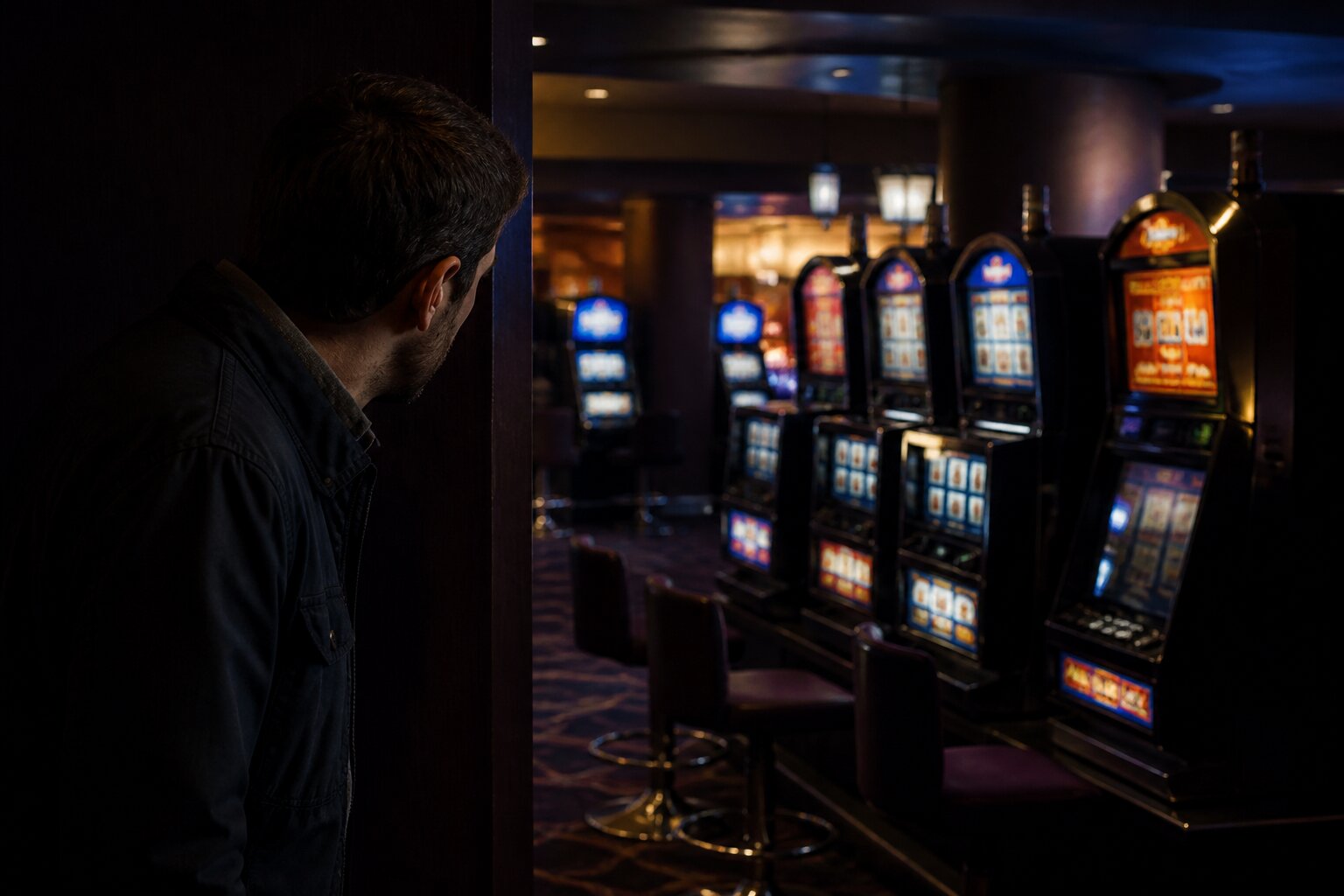
Ever found yourself standing in a casino, waiting for someone to leave a slot machine, convinced it’s just about to pay out? If so, you’re not alone. There’s a term for this quiet pastime—“lurking slot machines”—and it turns up regularly on casino floors.
Where did the phrase come from, and what does it actually mean? Read on to trace its roots, see how the idea has evolved, and understand what it says about players and the gaming environment.
What Does "Lurking Slot Machines" Mean?
“Lurking slot machines” describes staying close to a slot machine that’s currently being played, with the intention of taking over when the seat becomes free. The person waiting believes the machine might produce a payout soon and wants to be there when it does. It’s a behaviour driven more by anticipation than by any proven advantage.
Lurkers tend to be easy to spot: standing just behind a player, slowly circling a bank of machines, or watching from across the room. The behaviour ranges from casual observation to a more focused wait, but it’s rarely aggressive. In both physical venues and online communities the idea is the same—watching and waiting for an opening.
This practice sits somewhere between superstition and habit; it speaks to how people interact with games and with one another on the casino floor. Next, we’ll look at how this phrase developed and how it travelled from real-life floors into online conversations.
Origins and Evolution of the Term
The phrase grew out of traditional casino life, when players frequently gathered around popular machines. In earlier decades, heavy play and visible activity made it obvious which machines had been used a lot, and people began to hang around those positions expecting a payout might be imminent. The term “lurking” captured that behaviour — lingering nearby, ready to step in.
As casinos and their customer base changed, the term stayed in circulation among regulars and staff. It was informal, not a technical label, and it reflected the social aspect of the gaming floor: people watching one another play, sharing tips, or simply waiting their turn.
When slots moved online the behaviour shifted rather than vanished. Players started following game outcomes in forums or chatrooms, tracking hot or busy games in a social way instead of physically standing by a machine. That shift shows how the core idea—watching and waiting—remains useful as a cultural shorthand even as the setting changes. The next part explores why people actually choose to lurk.
Why Do Players Lurk Near Slot Machines?
There are several reasons someone might hang about near a slot machine. For many it’s curiosity: watching a game can be entertaining in itself and offers a chance to learn how other players approach particular features. Others have a strong preference for a specific machine or game and want to be ready when it becomes available.
Sometimes it’s simply practical. Busy casino floors mean popular machines can be in constant use, so waiting nearby is a way of securing a chance to play without wandering off. Social factors also play a part: casinos are public spaces where people watch and converse, and lingering lets players join in that atmosphere.
These motivations are behavioural rather than technical. Outcomes on modern slot machines are produced independently every spin, so lingering doesn’t affect results; instead, it reflects how players respond to the environment and to one another. With that in mind, the next section considers whether lurking has any real effect on results.
Common Motivations Behind Lurking
Curiosity and preference are the most common drivers: some players enjoy observing a game’s features, learning when bonus rounds trigger, or simply waiting for a turn at a machine they like. Practicality matters too — during busy periods, staying close avoids losing a spot in a queue. For a few, it’s social: watching others play can be part of the experience, offering a sense of connection on a busy floor.
Is Lurking Effective or Just a Casino Myth?
Lurking is part of casino folklore rather than a method that changes outcomes. Modern slot machines use random number generators to determine each spin independently; nothing about standing nearby or how long a machine has been played alters those mechanics. There are no reliable patterns that make one moment objectively better than another.
Testing and regulatory oversight are routine in licensed environments to ensure fairness and randomness, which further underscores that observation or timing does not influence results. Recognising lurking as a social habit rather than an edge helps players treat machines as entertainment and keeps expectations realistic. With that context, it’s useful to see how venues manage the behaviour so everyone feels comfortable.
How Do Casinos Address Lurking?
Venues aim to balance a lively gaming floor with the comfort and safety of every guest. Staff are trained to monitor behaviour and to step in if someone’s lingering becomes intrusive. Interventions are generally polite reminders about respecting others’ space and the venue’s code of conduct.
Physical layout and operations also reduce friction: clear walkways, seating, and crowd-management practices help prevent congestion around popular machines. During peak times, teams may supervise high-traffic areas more closely to make sure no one feels pressured.
Operators are expected to follow regulatory standards that protect player welfare, including maintaining a safe environment and enforcing conduct policies. These measures are about sustaining an enjoyable atmosphere for everyone and ensuring gaming remains fair and comfortable.
In short, lurking is a familiar feature of casino culture rather than a workable tactic. Understanding why people do it and how venues respond helps keep the experience pleasant for everyone, closing the loop on what the term really signifies and how it fits into the wider world of gaming.
**The information provided in this blog is intended for educational purposes and should not be construed as betting advice or a guarantee of success. Always gamble responsibly.