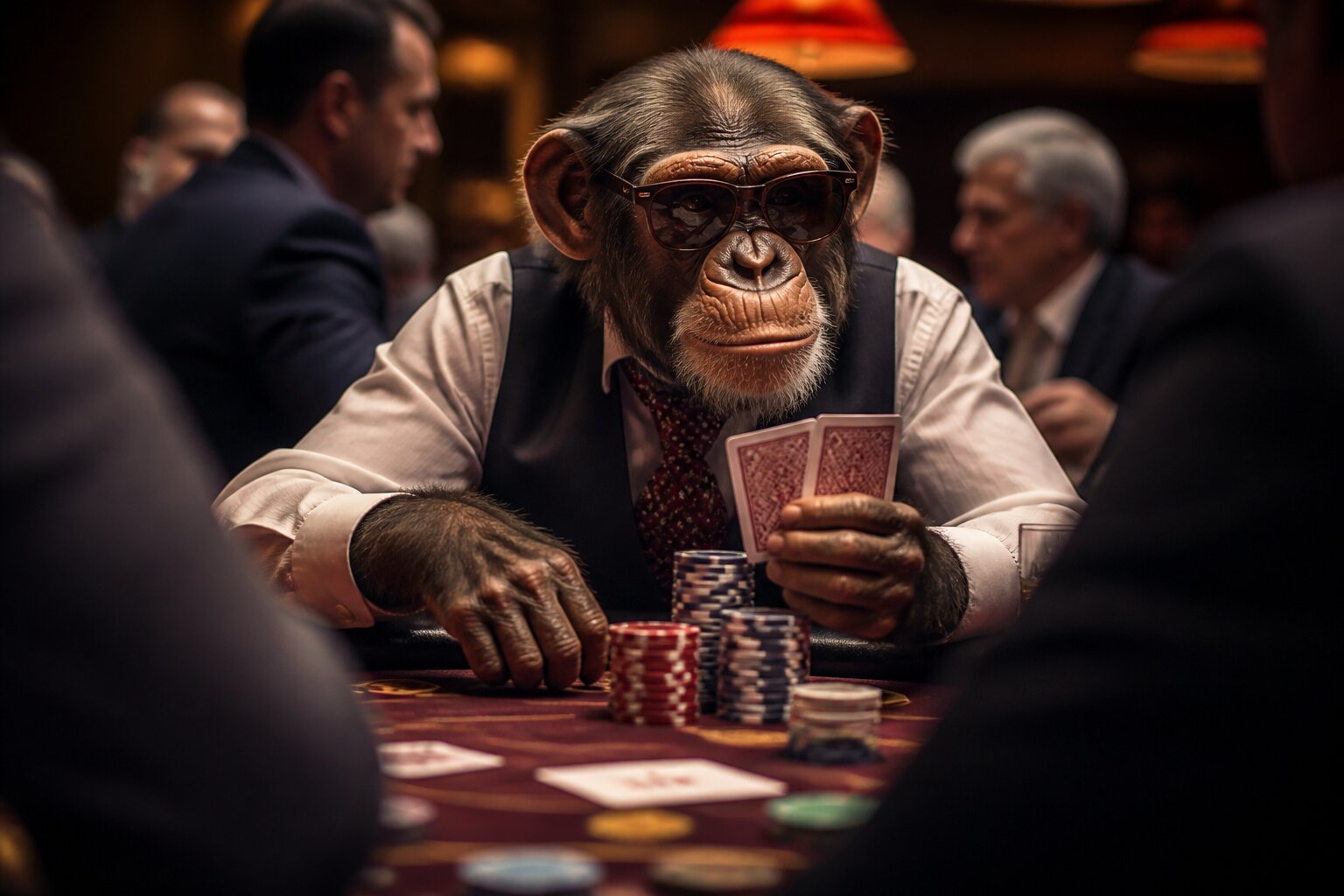
Ever wondered why some casino players ask for a "monkey" at the table? UK betting has a long history of quirky slang that can leave newcomers baffled—and the term "monkey" is among the most mysterious.
These colourful expressions add an extra layer of community and shorthand to casino games, often carrying stories from past decades into modern play. Curious to find out why the word “monkey” pops up in betting circles, what it actually stands for, and how it’s used today?
Keep reading to discover the hidden story behind this piece of casino language.
What Does 'Monkey' Mean in Betting?
In UK betting slang, a ‘monkey’ refers to a sum of £500. This term commonly appears in conversations about higher-value cash wagers, especially at busy casino tables or when experienced players settle larger bets between themselves.
For example, at roulette someone might say, "I’ll put a monkey on black," meaning a £500 stake on black. Or you may hear, “He settled his debt with a monkey,” indicating a £500 payment in cash.
The expression is shorthand: it helps players speak quickly and discretely about larger sums without repeatedly naming exact figures. Importantly, the word itself is only shorthand and has no bearing on how games operate; outcomes remain governed by the rules and the random processes within each game.
If you want to know how such a term came into everyday use, the next section explores the likely origins and stories behind it.
Where Did the Term 'Monkey' Originate?
The exact origin of ‘monkey’ is debated, with several plausible explanations rather than a single definitive source.
One popular account links the term to colonial India, where it is said £500 banknotes once carried an image associated with a monkey. British personnel who served or traded there may have brought that slang back to Britain. While direct documentary proof of such banknotes is limited, the story captures how overseas influence can shape local jargon.
Another explanation points to a broader habit among bookmakers and street gamblers of using animal names for sums of money. In this pattern, a ‘pony’ denotes £25 and a ‘ton’ £100; the naming convention reflects a playful approach to money terms rather than formal currency labels.
Taken together, these theories suggest that ‘monkey’ emerged from cultural exchange and the inventive language of betting communities. The term’s persistence today shows how colourful slang can become embedded in everyday conversation among players.
To see how that historical slang fits into modern play, the next section looks at where and how ‘monkey’ turns up in casinos today.
How Is 'Monkey' Used in Modern Casino Play?
Today, ‘monkey’ remains recognisable among many regular players, especially in face-to-face casino settings where cash or high-value chips are exchanged. At a physical roulette wheel or in a private card game, a player might quietly state a wager using the term to indicate a £500 stake without drawing attention to the exact amount.
In contrast, online platforms generally display precise figures, so shorthand is less common in the betting interface itself. Players may still use ‘monkey’ in chatrooms or forums when describing memorable hands or rounds, but the shorthand is typically a social habit rather than a practical necessity.
Using this kind of slang is a matter of style and tradition. It does not change the mechanics of play or affect outcomes. Keeping wagers within personal financial limits remains the most important practical consideration for anyone taking part in betting or casino games.
Understanding other common phrases can make that casino language feel more familiar, which is what the next section covers.
Common British Casino Slang Beyond 'Monkey'
British casinos and betting shops have developed a wide range of slang terms that describe money amounts and game situations. Knowing these phrases helps decode conversations at tables and may make the atmosphere easier to follow.
Popular Money-Related Slang Terms
These terms are widely used to refer to specific sums:
- Pony: £25. Example: “He’s put a pony on the first race.”
- Ton: £100. Example: “She walked away with a ton from the blackjack table.”
- Score: £20. Example: “Just place a score on red for me.”
- Bullseye: £50. Example: “Won a bullseye on the slots.”
- Grand: £1,000. Example: “He won a grand at poker last night.”
Game-Specific Casino Phrases
Other phrases describe particular situations or actions at the table:
- In the Hole: A face-down card dealt to a player in games such as blackjack. Example: “The dealer’s got an ace showing and one in the hole.”
- Cold Deck: A term used when a deck or table is producing consistently unfavourable outcomes for a player or group; it signals a rough stretch, not a cause-and-effect factor in play.
- Wheel: In roulette, the spinning section with the numbers. Example: “Spin the wheel and see where it lands.”
- Double Down: In blackjack, increasing a bet after receiving the first two cards and taking only one more card. Example: “I’ll double down on 11.”
- Push: A tie between the player and the house in games such as blackjack. Example: “Both got 20, so it’s a push.”
Familiarity with these terms helps players follow table talk and contributes to a smoother experience at the casino. The section that follows explains why such slang remains so widespread.
The Appeal of Slang in Casino Culture
Slang fulfils several social functions in casino settings. Primarily, it connects players to a shared heritage: many expressions have endured across generations, giving regulars and newcomers a sense of belonging to a continuous tradition.
It also provides efficiency and discretion. At a crowded table, a quick phrase conveys a bid amount or a situation without the need for a longer explanation. That same brevity can make conversations feel more private when players prefer not to announce exact sums aloud.
Beyond practicality, slang fosters camaraderie. Shared terms become part of the informal rituals that help groups relax into a session together, whether they are celebrating a good hand or commiserating about an unfortunate run. Using common language smooths social interactions and can make the overall experience more enjoyable for everyone.
As with any aspect of gambling, those taking part should keep wagers within personal means and treat the activity as entertainment rather than a financial strategy. By keeping games social and limits clear, players can enjoy the culture and phrases of the casino environment while managing their exposure to risk.
This brings the overview of “monkey” and related slang to a close: knowing the terms, their likely origins and how they are used helps demystify table talk and makes the casino experience more accessible for anyone curious about this part of betting culture.
Play Casino Games at Pay By Mobile Casino
Ever fancied adding a bit of excitement to your day? At our site, you’re welcome to explore a world of casino games in your own time and style.
It’s easy to get going – simply create your account, deposit when you’re ready, and enjoy playing with us. We’re here whenever you want to join in and have some fun.
**The information provided in this blog is intended for educational purposes and should not be construed as betting advice or a guarantee of success. Always gamble responsibly.