
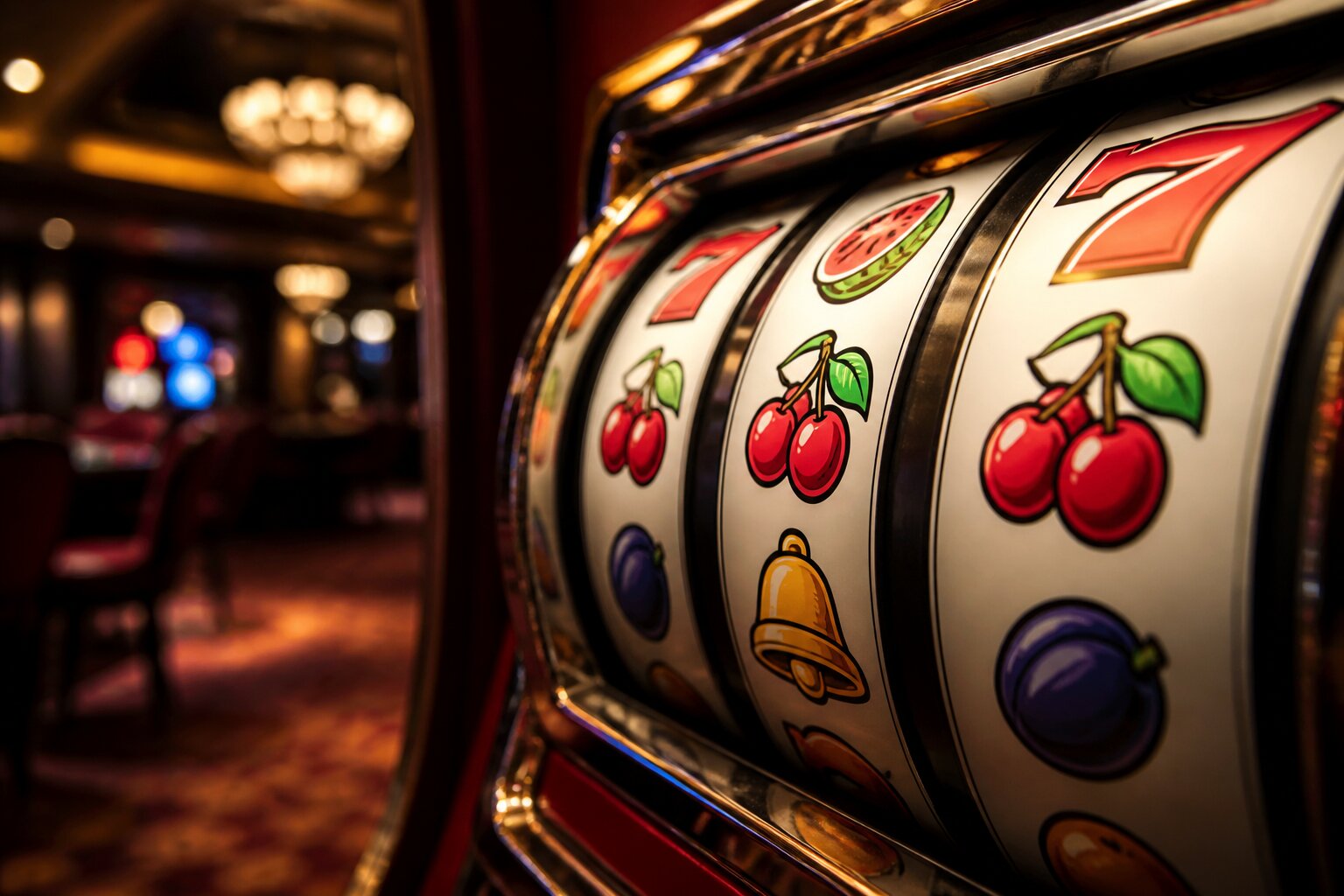
Ever wondered why slot machines have so many different symbols spinning on their reels? Or if the sheer number of these symbols has any impact on your chances of walking away with a win?
With so much happening behind the lights and spinning reels, it helps to separate fact from fiction. Before you next play, this article will explain how reel symbols work, what their number means for payouts, and why some ideas about symbols are simply myths.
How Do Slot Machine Reels Work?
Reels are the visible columns that display symbols when a slot is played. In older machines the reels were physical cylinders with symbols printed on them; today most games show animated reels on a screen, but both types present outcomes to the player in the same basic way: symbols land and the game checks whether they form a winning combination.
Behind the scenes, modern slots use a random number generator (RNG). Each spin triggers the RNG to select an outcome instantly, making every result independent of previous spins. That mechanism is what determines where symbols stop, not the visual animation you see. This system allows designers to vary the number and frequency of symbols while keeping each spin fair and unpredictable. Understanding that randomness makes it clearer why the sheer count of symbols is only one part of how a game behaves, and it sets up the next section on how symbol sets changed with digital slots.
Traditional vs Digital Slot Symbols: What’s Different?
Classic machines had a small, fixed set of symbols—fruit, bars and sevens—that were constrained by the physical reel space. That simplicity made the odds and payouts straightforward to follow: fewer symbols meant fewer combinations and simpler mathematics behind wins.
Digital slots freed designers from those physical limits. They can now use many more symbols and introduce special icons such as wilds and scatters that trigger features or bonus rounds. These extra symbols enable complex mechanics like cascading reels, expanding reels, and multi-way pays, which create a wider variety of potential outcomes on each spin.
Even with greater complexity, the same core principles apply: the paytable defines what combinations pay, and the RNG governs outcomes. The added symbols are mainly a tool to expand themes and features rather than to alter the fairness of the game, which is why regulated titles must publish clear information about their mechanics and return-to-player (RTP) characteristics.
Does the Number of Symbols on a Reel Impact Payouts?
The number of symbols on a reel affects how many possible combinations the game can produce. More symbols increase the combinatorial space, allowing designers to craft a broader range of winning patterns and bonus triggers. That variety can lead to larger jackpots or rarer features, simply because specific combinations become less frequent within a larger symbol set.
However, a larger symbol set does not inherently change the balance between player and house. What matters is how frequently each symbol is weighted within the RNG and how the paytable assigns value to combinations. A game can use many symbols but still offer frequent small wins, or it can use fewer symbols and pay out less often but in larger amounts. The overall payout behaviour is the result of the developer’s choices about symbol distribution and prize structure, not the raw symbol count alone. Next, we’ll look more closely at how combinations and jackpot chances relate to these design choices.
Maximum Winning Combinations Explained
When a reel system includes many symbols, the total number of possible line-ups grows quickly. This permits combinations that were impossible on older, simpler machines—such as multiple overlapping pay paths or thousands of “ways to win.” Those mechanics change how often specific outcomes occur and allow for layered bonus mechanics that reward particular patterns.
For example, a five-reel game with only eight symbols per reel has far fewer distinct outcomes than a similar five-reel game with 20 symbols per reel. Designers can use that extra space to introduce rare, high-value symbols or to create feature triggers that only appear under narrow circumstances. While that can mean bigger headline prizes, it also usually reduces the frequency of those prizes. The key point is that combinations expand with symbol count, and the game’s paytable determines how those combinations map to payouts.
Impact on Jackpot Probability
Jackpots and top prizes are typically tied to rare symbol combinations. Increasing the symbol pool can make those specific combinations rarer, so progressive or fixed jackpots may be hit less often. Conversely, a simpler symbol set can make high-value combinations more attainable, though those jackpots tend to be smaller as a result.
Developers tune symbol frequencies and reward structures to create the intended player experience—whether that’s regular small wins, occasional medium wins, or very rare large wins. Regulatory oversight requires that the advertised prize structure is honoured, so players can trust that jackpots and top prizes will be awarded according to the published rules.
Why Do Slot Machines Use Specific Symbols?
Symbols serve several purposes beyond visual appeal. They communicate the theme of the game, indicate which combinations pay, and signal when special features are available. Designers choose recognisable images to make it easy for players to read the paytable quickly and understand what to expect from a spin.
Special symbols—wilds that substitute for others, scatters that trigger features, or bonus icons that open mini-games—are tools to add strategic variety and excitement. Their presence changes the way outcomes are valued: a wild can raise the effective value of many combinations, while a scatter can create wins irrespective of paylines. Symbols are therefore a central part of a slot’s identity, shaping both look and function rather than altering the basic randomness that determines results. What follows is a closer look at whether more symbols actually benefit players.
Are More Symbols Always Better for Players?
More symbols mean more variety and potentially more complex features, but they don’t automatically make a game more favourable for the player. The advantage of extra symbols lies in the richer gameplay experience—additional themes, bonus rounds, and combinations—not in improved odds.
Players should focus on the game’s RTP and volatility to understand likely returns. A slot with many symbols may offer a compelling theme and exciting mechanics, yet deliver similar or even lower long-term payouts than a simpler title. In short, the player experience improves in terms of variety and narrative, while the expected financial outcome depends on how the game’s rewards are structured.
If you want to compare games, look at their published RTP and volatility information rather than judging by symbol count alone. That brings us to some persistent misconceptions about reels and cashing out.
Myths About Reel Symbols and Cashing Out
Several myths circulate about symbols and payouts. One common belief is that certain symbols or patterns signal an imminent payout; another is that adding symbols or reels improves winning chances. Both ideas misunderstand how RNGs operate: every spin is independent, so no visible pattern or changing symbol set on the screen can alter the underlying probabilities.
Another myth is that machines track “due” payouts, switching behaviour to pay out after long losing runs. In regulated environments, payout schedules and algorithms are fixed by design and audited, so outcomes are produced according to those specifications rather than by reactive adjustments. Knowing these facts helps set realistic expectations and reduces reliance on superstitions that can encourage poor decisions. With that in mind, the next section explains how randomness is maintained and how fairness is verified.
Understand Randomness and Game Fairness
Randomness in slots comes from the RNG, which ensures that each spin’s result is independent and unbiased. Game fairness is maintained by setting symbol frequencies, paytables and RTPs before release and then auditing the title to confirm it behaves as advertised.
Regulatory checks and independent testing are part of that process: they verify that the RNG performs correctly and that prize distributions match the published specifications. Player information such as payout percentages and feature rules should be available in the game’s help or information screens, enabling informed choices about which titles to play and how their mechanics function.
Set Limits and Play Responsibly
Playing with clear boundaries helps keep the experience enjoyable. Using available tools to set deposit limits, session reminders and other controls allows players to manage spend in a way that suits them. If gameplay ever feels problematic, self-exclusion or seeking support are appropriate steps to take. These measures protect the player while ensuring the focus remains on entertainment.
If you’d like to explore games with clear paytables and transparent mechanics, our site lists titles with detailed game information to help you choose wisely.
**The information provided in this blog is intended for educational purposes and should not be construed as betting advice or a guarantee of success. Always gamble responsibly.