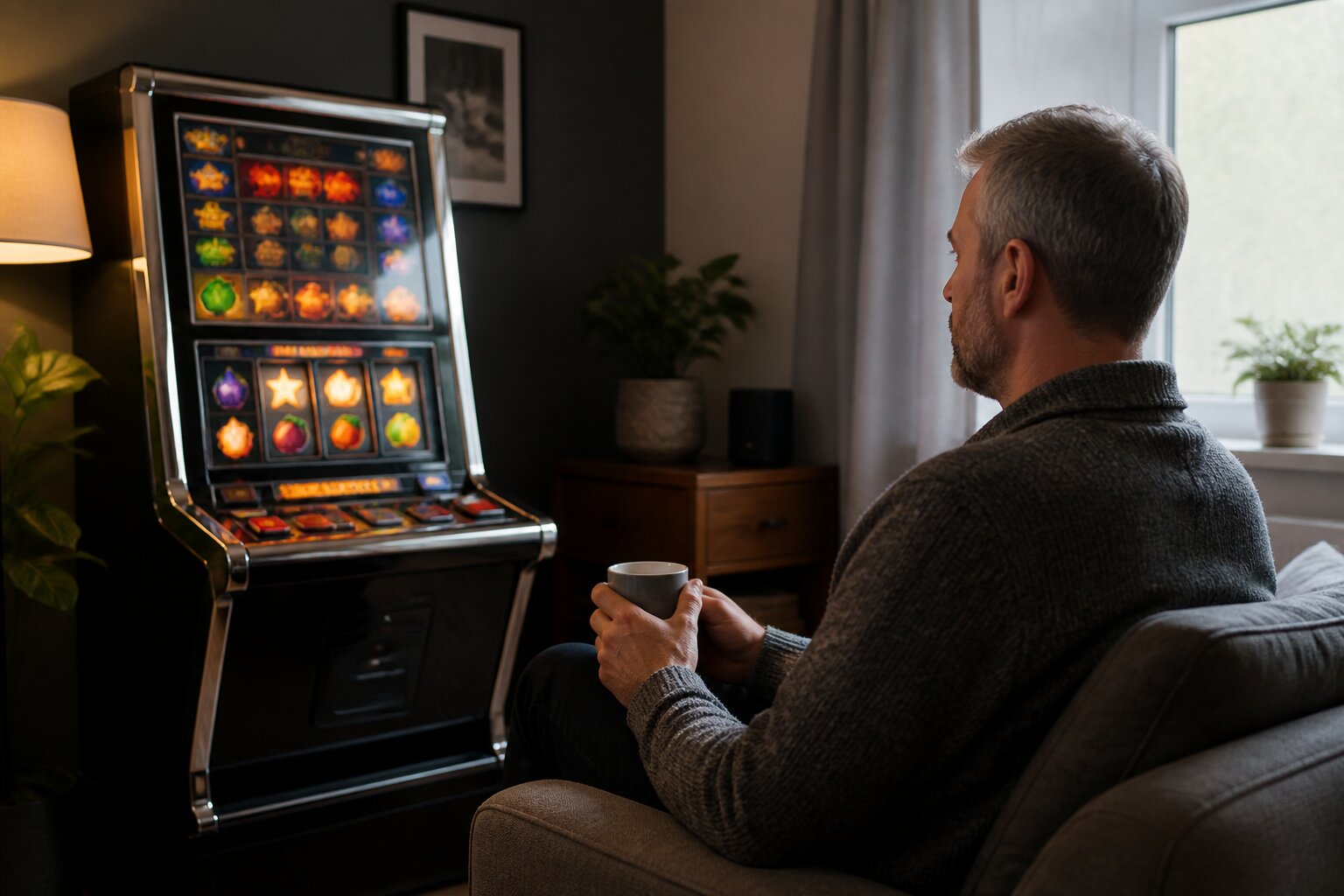
Thinking about getting a slot or fruit machine for your home? These machines can add a bit of old-school arcade charm to your living space, but the rules around owning and using them in the UK are specific and sometimes surprising.
This article explains those rules in plain English, covering what you can and cannot do with a machine at home, what happens if the law is ignored, and where to check for the latest guidance. Read on so you can enjoy a machine without risking fines or other trouble.
What Are Slot & Fruit Machines?
Slot and fruit machines are gaming devices that display symbols on reels or screens and pay out according to set combinations. Traditionally operated with a lever, most modern examples now use buttons and digital displays, and some include small bonus features or animations.
Under the technical side, these machines use a random number generator to determine outcomes, which means results are produced by software rather than a visible mechanical process. Payouts and play mechanics are set by the machine's design and the licence under which it operates in commercial settings.
Whether simple or feature-rich, their primary purpose is entertainment. That distinction matters for the law, because different legal rules apply depending on whether a machine is used privately or commercially.
Are Fruit Machines Legal to Own at Home in the UK?
Yes, it is legal to own a fruit or slot machine for private, non-commercial use at home. You do not need a gambling licence when the machine remains solely for personal entertainment and you are not making money from it.
There are limits though. The machine must not be used in any way that resembles a public gambling operation. Charging people to play, offering cash prizes, or advertising the machine to the public would move it out of the private-use category and require licensing.
Local councils may have their own rules or planning considerations, so it is sensible to check for any additional restrictions where you live before bringing a machine home.
What Licensing or Permissions Are Needed for Private Ownership?
For a machine kept at home and used privately, there is no requirement to obtain a gambling licence. Ownership for personal use is permitted provided the device is not used for commercial activity or public gambling.
If the intended use changes — for example, the machine is taken to a venue, hired out, or used in any setting where players pay to play — the legal position changes and formal licences are needed. The owner must make sure the machine remains inaccessible to the public if they wish to keep it in the private-use category.
It is also wise to keep records about where the machine came from and the conditions of sale, particularly if you buy second-hand, so you can demonstrate the machine is for private use if that ever needs clarifying.
Can You Legally Use Slot Machines for Private Events?
Using a machine at a private event in a home is acceptable provided there is no commercial element. The machine must be for entertainment only, with no charge to play and no cash prizes or other rewards that could be construed as gambling for gain.
If the machine is taken to a venue, used at an event where guests pay for entry, or hired out professionally, that constitutes commercial use and requires the appropriate licence. Public or commercial events operate under a different regulatory framework and must follow the relevant rules.
Also bear in mind that anyone under 18 must not use these machines under any circumstances. Ensuring only adults have access at events is a straightforward way to meet this legal requirement.
Selling or Buying Fruit Machines: What Are the Rules?
Buying or selling a fruit or slot machine in the UK is allowed, but the transaction must be between adults and the buyer’s intended use matters. Machines should be sold only to people aged 18 or over, and sellers should make clear whether a machine is for private use or requires a licence for commercial operation.
Buyers should check the condition and specification of a machine and confirm they are not planning to use it in a public or commercial setting without the correct permissions. Sellers should avoid offering machines to anyone who indicates they will run them commercially without licences.
Keeping a record of the sale, including contact details and a brief note on the declared intended use, can help both parties if questions arise later.
Are There Restrictions on Under-18s and Fruit Machines at Home?
UK law does not allow anyone under 18 to use fruit or slot machines, even in a private home. This is an absolute rule intended to prevent young people from being exposed to gambling-like activity and to uphold the protections set out in gambling legislation.
Owners are expected to take practical steps to stop minors from using these machines. This responsibility sits with the owner and forms part of complying with the wider legal framework around gaming devices.
Practical measures can include:
- storing machines in a locked room or secure cabinet;
- supervising use closely when adults are present;
- restricting access to power supplies or removing the machine temporarily if necessary; and
- keeping any documentation or manuals that show the device is intended for adult use only.
Taking sensible precautions reduces the chance of accidental access and helps demonstrate that the owner is meeting their legal obligations.
Common Myths About Slot & Fruit Machine Legality
There are several misconceptions that cause confusion. One is that you can charge friends to play at a private gathering or hand out cash prizes without consequences. In practice, charging or offering prizes can turn a private machine into an unlicensed gambling operation, which the law prohibits.
Another myth is that age restrictions do not apply at home. As noted, under-18s are not permitted to use these machines under any circumstances. A further mistaken belief is that any number or type of machine can be owned without restriction. While private ownership is permitted, the context of use determines whether licences are needed.
Where something sounds like a shortcut to income, it is worth being cautious: machines kept for entertainment should not be treated as a source of revenue.
What Happens If You Break UK Slot Machine Laws?
Breaching the laws can lead to significant penalties. Actions that commonly trigger enforcement include:
- running machines for profit without a licence,
- allowing anyone under 18 to play,
- operating machines in a way that resembles public gambling.
Those breaches may result in fines, seizure of equipment and, in more serious cases, criminal charges. Regulatory bodies such as the UK Gambling Commission and local authorities can pursue civil and criminal remedies, and persistent or flagrant offences may lead to larger penalties or confiscation of assets.
Consequences extend beyond penalties for the machine itself. A criminal conviction can affect employment prospects and appear on criminal records, and businesses that ignore the rules risk losing licences and suffering reputational damage.
Complying with the legal framework is therefore both a practical and protective measure for owners and anyone who uses their machines. Staying informed about licensing requirements, age checks and permitted locations helps reduce the risk of enforcement action and supports safer, lawful operation.
Where to Find Official Guidance on Slot Machine Laws
If you need the most current legal position or practical details, refer to official sources. These provide the definitive guidance on licensing, permitted use, and responsibilities.
UK Gambling Commission (UKGC)
The UK Gambling Commission publishes detailed information on licensing requirements and the legal distinctions between private and commercial use. Their site is the primary reference for regulatory questions.
Government and Local Council Websites
Gov.uk and local council pages can offer supplementary information, especially about any local restrictions or planning considerations that might affect keeping a machine at home.
Checking these sources regularly helps you stay up to date with any changes to legislation or guidance.
**The information provided in this blog is intended for educational purposes and should not be construed as betting advice or a guarantee of success. Always gamble responsibly.