
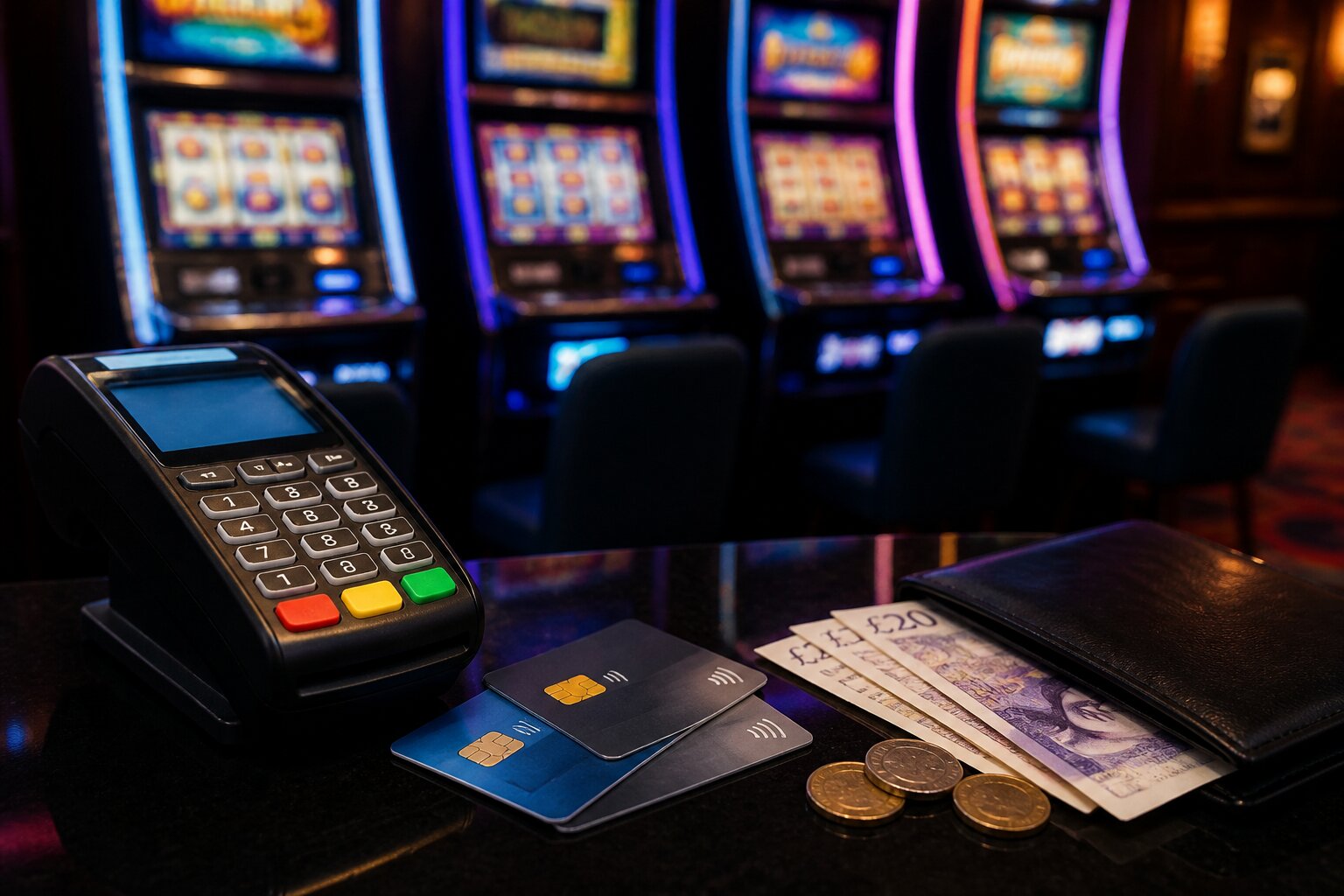
Slot machines are everywhere, from online sites to local arcades, and as cashless payments become more common people naturally ask whether they can use a debit or credit card to play. The short answer is: you can often use debit cards and various digital payment methods, but credit cards are not permitted for gambling in the UK.
This article explains how cashless systems work in both physical and online environments, what limits and checks apply, and what alternatives exist if you do not want to use a debit card. Read on to understand the practicalities and what to expect when paying for slot play.
How Do Cashless Slot Machine Systems Work?
Many modern casinos and online platforms support cashless play through account-based systems. In venues, a player can add funds at a cashier or kiosk and receive a printed ticket or an electronic credit that is accepted by the machine. Online, payments go straight into an account balance that is used to place spins. These systems are designed to process transactions quickly, keep payment details secure, and integrate with identity checks required by law.
Operators link payment channels to the casino’s account management system so funds are credited and debited cleanly; this also makes it easier to apply limits and monitor patterns that could indicate problematic activity. Technology varies between operators and venues: some use contactless terminals by the machines, others prefer centralised kiosks. The next sections explain the most common cashless methods you will encounter on-site and online.
Contactless Card Payments Explained
Contactless payments let a player tap a debit card on a terminal to add funds to a machine or to a linked account. In casino settings the terminal may sit at a cashier desk, a kiosk, or be integrated with the venue’s account system. Payments are handled immediately and the credited amount becomes available for play almost straight away.
Because credit cards cannot be used for gambling in the UK, only debit cards are accepted through these contactless channels. Larger or repeated deposits can prompt additional checks, and venues will have rules about daily or per-transaction limits. Moving from a contactless top-up to other ways of funding play is straightforward, and many readers go on to ask about mobile wallets next — which is where the following section helps.
Mobile Wallets and Digital Payment Methods
Mobile wallets and popular e-wallets are widely supported, particularly by online casinos and by some land-based venues at cashier points. These services allow a phone or linked account to authorise payments and transfer funds into a casino account without entering card details on the site itself. For players, this can mean faster deposits and a simpler checkout experience.
Operators treat these methods much like card payments: they are tied to the user’s account, go through verification where required, and are subject to the same deposit and withdrawal controls. Where a venue accepts a mobile wallet for on-site play, the wallet is used at the cashier or kiosk rather than being tapped directly on a machine in most cases.
Why Do Some Slot Machines Still Require Cash?
Not every machine has been upgraded to accept cashless payments. Many machines in pubs, smaller arcades, and older venues are not networked, so they continue to rely on coins or notes for play and payout. The cost and logistics of upgrading or replacing hardware are often the main reasons these legacy devices remain cash-only.
Outside these older machines, casinos generally place cashless terminals at supervised points so staff can check ID and manage larger transactions. Where cash-only machines remain in a venue, players will often find standard banking options such as ATMs or a cashier desk nearby to convert bank funds into playable credit. If you prefer not to use cash, checking what facilities a venue offers before you visit will save time.
Accessing Funds: On-Site ATM Machines & Cash Desks
Venues commonly provide ATMs and staffed cash desks to help players exchange bank funds for slot credits. ATMs let customers withdraw cash with a debit card subject to bank and machine limits, while cash desks can accept card or mobile wallet payments and place funds into the player’s account or issue a voucher for machine use.
Both ATMs and cash desks present clear information about any withdrawal fees and transaction limits. For larger transfers between a bank account and a casino account, staff may request identification to complete required checks. Online players see a similar pattern: digital payment methods are available once account verification is complete, and account settings typically display deposit history and any active limits. The following section outlines those limits and how they apply.
Are There Limits or Restrictions on Card Usage at Casinos?
Card and digital payments are governed by operator policy and regulation. In the UK, gambling payments must not be taken from credit cards, so only debit cards and linked bank-based methods are permitted. Operators set daily, weekly, or per-transaction limits which may vary between venues and platforms, and higher deposits commonly trigger additional verification.
Older machines and many small venues lack the infrastructure to accept cards or e-wallets, so cash remains necessary in those locations. Where card acceptance exists, staff can explain the specific limits and options for a particular venue or site. Clear limits are intended to give players control over their spending, and many venues also offer ways to change or apply personalised limits through account settings or with staff assistance.
Risks and Security Considerations with Card Payments
Card and digital payments are processed through encrypted terminals or secure online gateways to protect personal and payment information. Operators do not store full card details on machines; instead, they rely on payment processors and account systems that meet industry security standards.
Identity checks are part of the process for larger or unusual transactions, and venues follow legal requirements to verify age and identity when necessary. Transaction limits and monitoring help reduce the risk of unauthorised use, and ATMs and cash desks make fees and limits clear before a customer completes a withdrawal or deposit. Knowing how these safeguards work makes it easier to choose a payment method that balances convenience with security.
Alternatives to Card and Cash Deposits
If you prefer not to use a debit card or cash, several alternatives are commonly available. E-wallets and mobile wallets let a player fund their casino account without directly entering card details on a site. Bank transfer services provide another route for moving funds, and prepaid vouchers can be purchased in shops and redeemed online or at cashier points without exposing bank information.
Each option has its own typical limits and verification requirements. Prepaid vouchers often have per-transaction caps, while bank transfers can support larger amounts once identity checks are complete. Where a method is offered, the venue or site will indicate any limits and the expected processing time, so users can choose the approach that fits their needs.
This overview covers the main ways to pay for slot play and the practical considerations that come with each method, helping you decide which option suits you best.
Enjoy Slots Online at Pay By Mobile Casino
Take a moment to unwind and enjoy the atmosphere on our site. We’ve created the perfect setting for you to relax and play your favourite casino games at your own pace.
Getting started couldn’t be simpler – just set up your account, make a deposit and you’re ready to go. We’re always here to welcome you whenever you fancy a game.
**The information provided in this blog is intended for educational purposes and should not be construed as betting advice or a guarantee of success. Always gamble responsibly.