
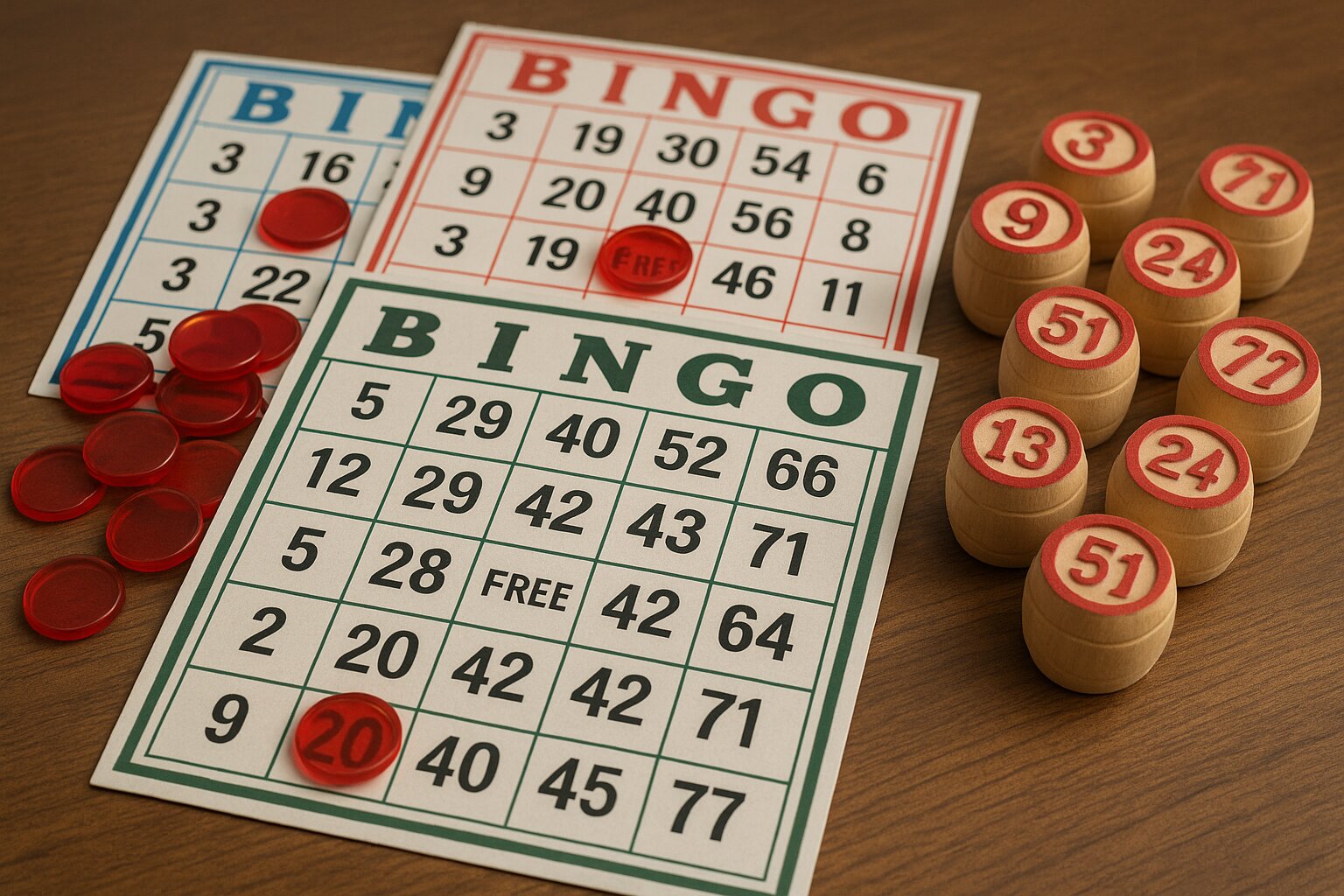
Bingo is more than just dabbers, cards, and calling out numbers, it has a long history that reaches back centuries and across continents. Its story is a patchwork of different customs and ideas, each place leaving its mark on the game we know today.
Whether you’ve played in a hall or online, you’re taking part in a tradition built around shared moments and friendly competition. Read on to see how bingo grew from simple lottery roots into a social pastime enjoyed around the world.
Where Did Bingo Originate?
Bingo’s origins trace back to 16th-century Italy, where a game called Il Gioco del Lotto d’Italia was played as a regular public lottery. That early form introduced the basic idea of selecting numbers and matching them to cards, a concept that would travel and change over time.
By the 18th century the game had spread to France as Le Lotto, where it gained popularity among different social groups and was sometimes adapted as a learning aid for children. As it moved through Germany and other parts of Europe, local versions used similar mechanics but different card layouts and rules.
When the game reached Britain and later North America it continued to adapt. Changes in card design, calling styles and the settings where it was played reflected local preferences and the needs of the communities who embraced it. These shifts show how a simple concept can evolve when it becomes part of everyday life in many places.
How Did Bingo Spread Across the World?
The game travelled with people as they moved and traded ideas. In the 19th and early 20th centuries, adaptations appeared in Britain and North America, each region shaping the game to fit its own social environments.
In the United States, an early form called Beano was played at fairs and social gatherings, using beans to mark cards. The name bingo emerged later and became widespread as standardised sets and rules began to circulate. Back in Britain, bingo found a place in clubs and village halls, where it became a regular social activity.
Technological changes in the late 20th and early 21st centuries expanded bingo’s reach further. Telephone and internet services made it possible to play remotely, and digital platforms introduced new formats and interfaces that appealed to a broader audience. Throughout these shifts, the core idea of matching drawn numbers to a card remained constant, even as presentation and settings changed.
What Were the Early Versions of Bingo Called?
Across regions and eras the game carried various names that reflected local language and customs. In Italy it was Il Gioco del Lotto d’Italia, in France Le Lotto, and in parts of Germany it appeared simply as Lotto. These versions shared the pattern of drawing numbers and marking cards, though they sometimes emphasised different purposes, such as education or community fundraising.
When the game reached North America it was known as Beano, a name tied to the practical habit of using beans as markers. As the game became commercialised and standardised, the term bingo became the dominant name for the activity. Each title points to the same basic mechanic, adapted to local tastes and needs.
Bingo in British Culture: How Did It Become Popular in the UK?
Bingo became a familiar part of British social life in the 20th century, particularly after legal changes allowed commercial halls to operate more freely. These venues offered a regular, structured place for people to gather, and they often became local social hubs hosting charity events and themed nights.
The format most associated with Britain, 90-ball bingo, established common practices for cards, prizes and calling methods. Callers developed distinctive styles that became part of the entertainment, and halls cultivated a social atmosphere where conversation was as important as the game itself.
Even as online options emerged, many people still value the ritual of attending a hall and the company it provides. The game’s endurance in Britain reflects how it adapted to changing times while remaining a focus for local gatherings and fundraising.
How Has the Bingo Game Changed Over Time?
Bingo’s evolution has covered venues, technology, card formats and audience expectations. Traditional halls continue to operate alongside electronic and online platforms that offer virtual cards and automatic number displays.
Card formats diversified too. While the 90-ball game remains popular in Britain, other formats such as 75-ball bingo and quick-play themed variants appeared elsewhere, giving players more choice. Electronic systems also introduced features like auto-marking and instant notifications, which change how people interact with the game without altering its basic rules.
Calling styles and presentation shifted with the medium. In-person callers developed local personalities and lexicons, while online games mostly rely on automated announcements and chat rooms that preserve social interaction in a different form. These adaptations show how the game keeps its essential structure while finding new ways to engage players.
Who Played a Major Role in Shaping Bingo as We Know It?
Bingo’s modern form emerged through contributions from many quarters over time. Commercial entrepreneurs who produced standardised sets, rules and printed cards helped popularise the game for home and social use. These products made it easier for people to play consistently and for groups to run games without bespoke equipment.
Community groups, churches and charities used bingo as a practical fundraising tool, which extended its reach into local life. Regular sessions became fixtures in community calendars, bringing people together and raising money for a variety of causes. In many places bingo helped sustain small clubs and voluntary organisations through modest but dependable income.
Operators who established public halls and later digital platforms shaped the user experience by developing:
- venues tailored to larger audiences and social atmospheres,
- customer service practices such as staffing, hospitality and responsible play measures,
- entertainment formats that combined game play with music, hosts and themed events.
Collectively, these influences professionalised aspects of the game while community organisations kept its social and charitable uses alive. The result was a balance between commercial development and grassroots activity, which helped bingo remain both a business and a community pastime.
Myths and Misconceptions About the Invention of Bingo
Stories that credit a single inventor for bingo oversimplify a long, gradual process. The game emerged over centuries from a mix of practices rather than being created in one place at one time.
Its development involved cultural exchange and incremental refinements, including:
- the Italian tombola and other early lottery-style games that used numbered tickets;
- travelling fairs and parlour games that popularised communal play;
- charitable and church events where similar games were used for fundraising and socialising.
Another common misconception is that large prizes have always been central. In many historical settings the focus was on social interaction, fundraising or learning rather than big payouts. Small stakes, simple rewards and community participation were often more important than commercial prizes.
Recognising these points gives a clearer view of bingo as a flexible activity shaped by many needs and traditions. The game has continually adapted to different social contexts and regulations, which helps explain the variety of formats and purposes seen today.
The Digital Age: How Has Bingo Adapted to Online Platforms?
Online bingo recreated familiar elements in a virtual space, keeping the social side through chat features and community rooms while offering new conveniences like instant ticket purchase and varied session times. Platforms present a wider range of formats and themed games, and they also integrate features such as auto-marking to reduce repetitive tasks for players.
Regulation and technology combine to ensure fair play and data security on reputable sites. Platforms use random number generation for draws and encrypted transactions to protect user information, while customer service and community moderation help maintain a welcoming environment.
Most players value the convenience and choice that online options provide, yet many still appreciate the sense of connection that bingo has always offered, whether in a hall or on a screen.
Why Does Bingo Remain Popular Today?
Bingo endures because it combines straightforward rules with social interaction and a clear, shared purpose. People are drawn to its accessible format, which requires little prior experience and allows players to join in quickly. The variety of formats and settings, from community halls to online rooms, means there is usually an option that fits different tastes and schedules.
Tradition plays a role too. For some, bingo is a link to family memories and local habits; for others, it’s an easy way to meet people and take part in communal activity. These aspects—simplicity, social connection and adaptability—help explain why the game continues to be enjoyed by different generations.
If you choose to play, make sure it stays a positive experience by setting limits and being aware of the time and money you spend. Support and advice are available from independent resources such as BeGambleAware.org, which provide guidance for anyone who needs it.
Bingo’s story shows how a simple idea can travel, change and remain meaningful. From early lotteries to modern digital rooms, it continues to bring people together in shared play and conversation.
**The information provided in this blog is intended for educational purposes and should not be construed as betting advice or a guarantee of success. Always gamble responsibly.