
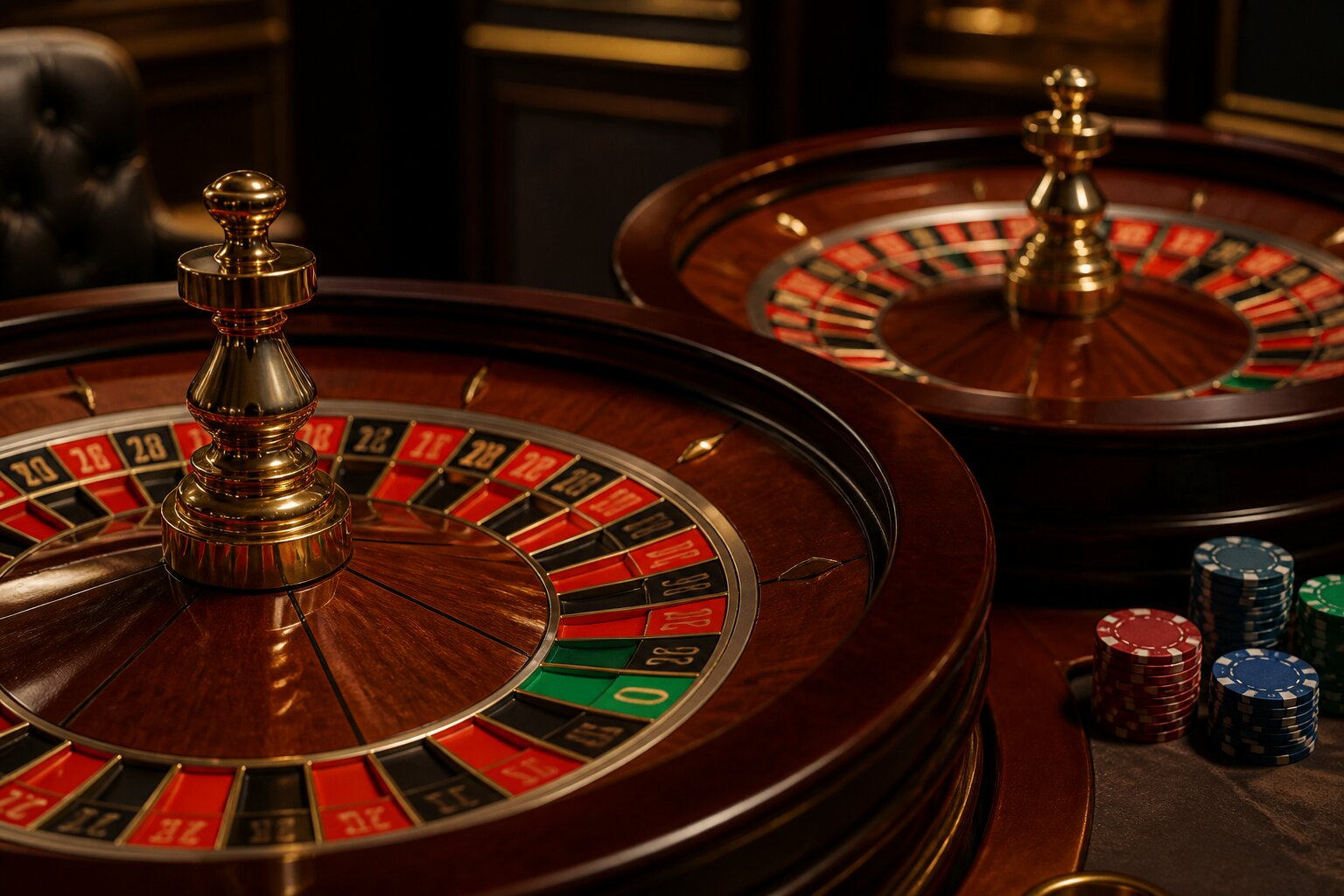
When it comes to roulette, small differences in the rules change how the game feels and how bets pay out. One key choice is between double zero (American) roulette and single zero (European or French) roulette.
They look similar at a glance, but the presence of a single extra pocket alters the wheel, the table, and the maths behind every wager. Read on to see exactly what changes and why it matters when you place a bet.
Curious which version might suit your playstyle? Start by looking at the core contrasts between the two.
Key Differences Between Double Zero and Single Zero Roulette
The most visible distinction is the wheel layout. Double zero roulette includes both a 0 and a 00 pocket, giving it 38 pockets in total. Single zero roulette has only one 0 and therefore 37 pockets. That single extra pocket reduces the probability that any particular bet will win, because there are more places the ball can land.
This change also shifts the built-in casino advantage. With one zero, the house edge on most bets sits at about 2.7%. Adding the double zero raises that to roughly 5.26%. For example, a straight-up number bet in single zero is one in 37; in double zero it is one in 38, yet both pay 35 to 1. That is the fundamental reason the house edge differs.
Bet choices themselves are largely the same across both versions: inside bets on numbers, split or corners, and outside bets such as red/black or odd/even. However, double zero tables sometimes include a specific basket bet covering 0, 00, 1, 2, and 3, a wager not available on single zero layouts. Some single zero tables — notably French-style ones — also offer player-friendly rules that affect even-money bets. We will examine how those rules work and how they change outcomes on the table.
How Do the Wheels and Layouts Compare?
The wheel and the betting layout are practical, visible differences that influence how you place chips and interpret the table.
What Are the Differences in Wheel Design?
On a double zero wheel there are 38 pockets: 18 red, 18 black and two green pockets, 0 and 00. The extra green pocket alters the number sequence and the spacing of pockets around the wheel, which gives it a subtly different rhythm when the dealer spins.
A single zero wheel has 37 pockets: 18 red, 18 black and a single green zero. The reduced count changes the numeric sequence and creates a slightly different visual balance. These differences do not change payouts, but they are noticeable to players who watch the wheel and prefer one look or layout over another. Next, consider how those wheel differences appear on the table felt and how they shape betting choices.
How Do Table Layouts Affect Gameplay?
The betting table mirrors the wheel: double zero tables include an extra marked area for 00 near the single 0 and will often show the space for the basket bet. Single zero tables have a simpler top area with only the one zero marked. French roulette layouts may include extra sections or labels for bets such as Orphelins, Tiers and Voisins du Zero and may display rules that apply to even-money bets.
These layout differences influence how chips are placed for inside and outside bets. The basket area on double zero tables invites a specific wager covering five numbers, while single zero tables free up space for other specially labelled bets in French games. The layout choice nudges players toward certain wagers, which in turn affects the playing experience.
Which Rules Change Between Double and Single Zero Versions?
Rules beyond the wheel and table can alter how much of a stake a player keeps after particular spins, and that shapes a session more than many realise.
Impact on Betting Options
Both versions allow standard inside bets (straight, split, street, corner) and outside bets (red/black, odd/even, high/low). The basket bet—covering 0, 00, 1, 2 and 3—is specific to double zero tables because it includes 00. In practical terms, that bet pays differently from other inside wagers and exists only where the double zero appears.
Rule Variations Affecting Player Experience
Single zero games, especially French roulette, sometimes include rules named La Partage and En Prison that change the outcome of even-money bets when the ball lands on zero. Under La Partage, an even-money wager loses only half its stake if zero appears. En Prison holds the stake for a subsequent spin: if the next spin wins the original even-money bet, the stake is returned; otherwise the stake is lost. These rules reduce the effective house edge on even-money bets.
Double zero tables do not offer these protections; an even-money bet landing on 0 or 00 results in a full loss of the stake. That contrast can affect how comfortable a player feels with even-money wagers and shapes the financial difference between versions over many spins. The next section breaks down how those rule differences show up in house edge and payouts.
How Do House Edges and Payouts Differ?
The payouts listed for common bets are the same across both versions, but the underlying odds change because of the different number of pockets. A straight-up number bet pays 35 to 1 in either game, yet the chance of winning is one in 37 on a single zero wheel and one in 38 on a double zero wheel. That mismatch is what creates the higher house edge on double zero tables.
The table below summarises standard payouts and notes where a wager is unique to one version of the game.
| Bet Type | Double Zero (0 & 00) | Single Zero (0) |
|---|---|---|
| Straight (1 number) | 35 to 1 | 35 to 1 |
| Split (2 numbers) | 17 to 1 | 17 to 1 |
| Street (3 numbers) | 11 to 1 | 11 to 1 |
| Corner (4 numbers) | 8 to 1 | 8 to 1 |
| Five Number / Basket | 6 to 1 (unique) | N/A |
| Red/Black, Odd/Even, High/Low | 1 to 1 | 1 to 1 |
Where La Partage or En Prison apply on single zero tables, the effective house edge on even-money bets can be lower than the base 2.7% figure, which makes outcomes on those bets more favourable to players over time. Double zero games lack those rules and therefore keep the higher edge. With that in mind, many players choose a version based on how much they value slightly better long-term returns versus the particular bet types available on their preferred layout.
Why Do Players Choose One Version Over the Other?
Players pick a version for practical and personal reasons. Some prefer double zero because it is commonly found in certain venues and includes the basket bet, which some find appealing as an alternative way to place a wager. Others favour single zero because of the lower house edge, simpler layout, and the presence of La Partage or En Prison in French games, which can soften losses on even-money bets.
Comfort and familiarity play a part too: a player may stick with the version they first learned or the one offered where they play most often. Atmosphere, dealer interaction and table limits also influence choice. Whatever the reasons, selecting a game that matches how someone likes to play helps maintain enjoyment.
Keep your play within sensible limits and treat roulette as entertainment rather than a way to achieve financial aims. Choosing the version that fits your preferences and budget is the best way to make every session feel worthwhile.
Play Online Casino Games at Pay By Mobile Casino
We’re pleased to offer you a relaxed place to enjoy casino games, where you’re free to play as and when it suits you best. Our site welcomes everyone looking for a comfortable experience without any fuss.
**The information provided in this blog is intended for educational purposes and should not be construed as betting advice or a guarantee of success. Always gamble responsibly.