
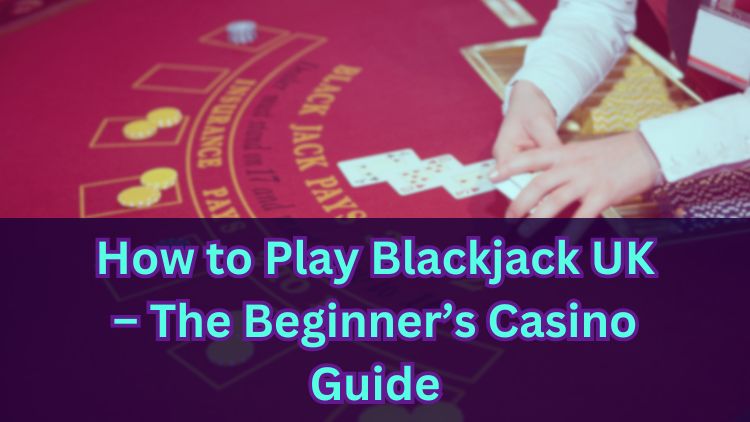
Blackjack is one of the best-known card games in UK casinos, both online and in person. The idea is straightforward: build a hand that totals 21, or as close as possible, without going over. You play against the dealer, not the other players.
This guide walks through how a standard game works in the UK, explains common terms, and shows how each round unfolds. You will see what the cards mean, the options you can take, and why table rules matter. If you have ever wondered how blackjack actually plays out, this will give you a clear picture before you take a seat.
Blackjack involves chance, and outcomes can never be guaranteed.
What Is Blackjack And How Does It Work In The UK?
Blackjack is a card game where each player competes with the dealer. Everyone starts with two cards. The dealer also takes two, with one face up and one face down. You then decide whether to take more cards or stick with what you have, aiming to beat the dealer’s final total without going over 21.
There are several versions of blackjack in the UK. Classic or European Blackjack is the one you will see most often. The core idea stays the same, but details can vary, such as how many decks are used, whether the dealer takes another card on a soft 17, or when certain options are available.
As you will see next, understanding how cards are valued is the foundation for every decision at the table.
Blackjack Card Values Explained
Card values in blackjack are simple. Most games use one or more standard 52-card decks, and each card contributes to your total.
Cards 2 to 10 are worth their number. So, a 5 and an 8 make 13.
Jacks, Queens, and Kings are worth 10 points each. A King and a 6 total 16.
The Ace is flexible. It can be 1 or 11, whichever is better for your hand. An Ace with a 9 can be 20 if the Ace counts as 11, or 10 if it counts as 1. A hand that includes an Ace counted as 11 is often called “soft,” because if you draw another card that would otherwise bust you, the Ace can shift to 1 instead. A hand with no such flexibility is “hard.”
If your total goes over 21, you “bust” and lose that round. With those basics in place, the next step is knowing what you can do with your hand.
What Choices Can You Make During A Hand?
After the first two cards are dealt, you can usually choose from a small set of actions. The options available can differ slightly between tables, so it helps to glance at the paytable or on‑screen rules before you start:
- Hit: Ask for another card. You can continue until you either stand or bust.
- Stand: Take no more cards and keep your current total.
- Double down: Increase your original stake in return for exactly one more card. Some tables allow this only on totals such as 9, 10, or 11; others allow it on any two cards.
- Split: If your first two cards have the same value, you may be able to split them into two separate hands by placing a second stake. Each hand then draws cards independently.
- Surrender: In some versions, you can end your hand early and forfeit part of your stake. This is not available everywhere.
- Insurance: A side bet sometimes offered when the dealer’s face-up card is an Ace. It pays if the dealer has a blackjack. Not all players choose to use it, and it is separate from your main hand.
The best choice depends on your total, the dealer’s visible card, and the rules of that particular table. No approach can remove the role of chance, but knowing your options helps you make consistent decisions.
What Are The Common UK Blackjack Table Rules?
Although formats vary, most UK tables follow a familiar rhythm. Many use 6 or 8 decks. You place a stake, receive two cards, and the dealer takes two, with one face up. The dealer must then follow fixed rules, which removes guesswork on their side. Typically, the dealer hits on 16 or lower and stands on 17 or higher. Some games require the dealer to stand on all 17s, while others require a hit on a soft 17.
Rules around player options are set by the house and are posted on the table or in the game’s information panel online. Common variations include when you may double down, whether doubling is allowed after a split, and how many times you can split pairs. A surrender option, if offered, will be clearly marked.
Payouts are also shown up front. A two-card 21 often pays 3:2, which means a £10 stake returns £15 in winnings plus your original £10. Some tables use a different payout for this hand, so it is worth checking before you begin. With those house rules in mind, it helps to know how a two-card 21 is treated.
What Is A Natural Blackjack?
A natural blackjack is a two-card total of 21, made with an Ace and any 10-value card. For example, an Ace with a Queen is a natural blackjack. It is the strongest starting hand and usually pays more than a standard winning hand.
Many UK tables pay 3:2 for a natural blackjack. Using the earlier example, a £10 stake would usually return £15 in winnings plus your original £10. Some games set a different rate, so the paytable is the place to confirm. With a standard 52-card deck, the chance of being dealt a natural blackjack is about 4.8%.
As ever, the cards decide the outcome, and procedures for handling natural blackjacks are listed on each table’s rules display.
Is Blackjack Easy To Learn For Beginners?
Many beginners find blackjack approachable because the aim is clear and the choices are few. After a couple of rounds, actions like hit, stand, split, and double down start to feel familiar. The finer points, such as how soft hands work or when certain options are available, become clearer as you see more hands played.
That said, how comfortable it feels varies from person to person. Some prefer to keep things simple and focus on totals, while others like to learn how different table rules influence decisions. Taking your time, starting with lower stakes, and reading the table information can make the experience smoother.
Blackjack should only be played with money you can afford to lose. Set sensible limits, and if it stops being enjoyable, step away.
*All values (Bet Levels, Maximum Wins etc.) mentioned in relation to these games are subject to change at any time. Game features mentioned may not be available in some jurisdictions.
**The information provided in this blog is intended for educational purposes and should not be construed as betting advice or a guarantee of success. Always gamble responsibly.