
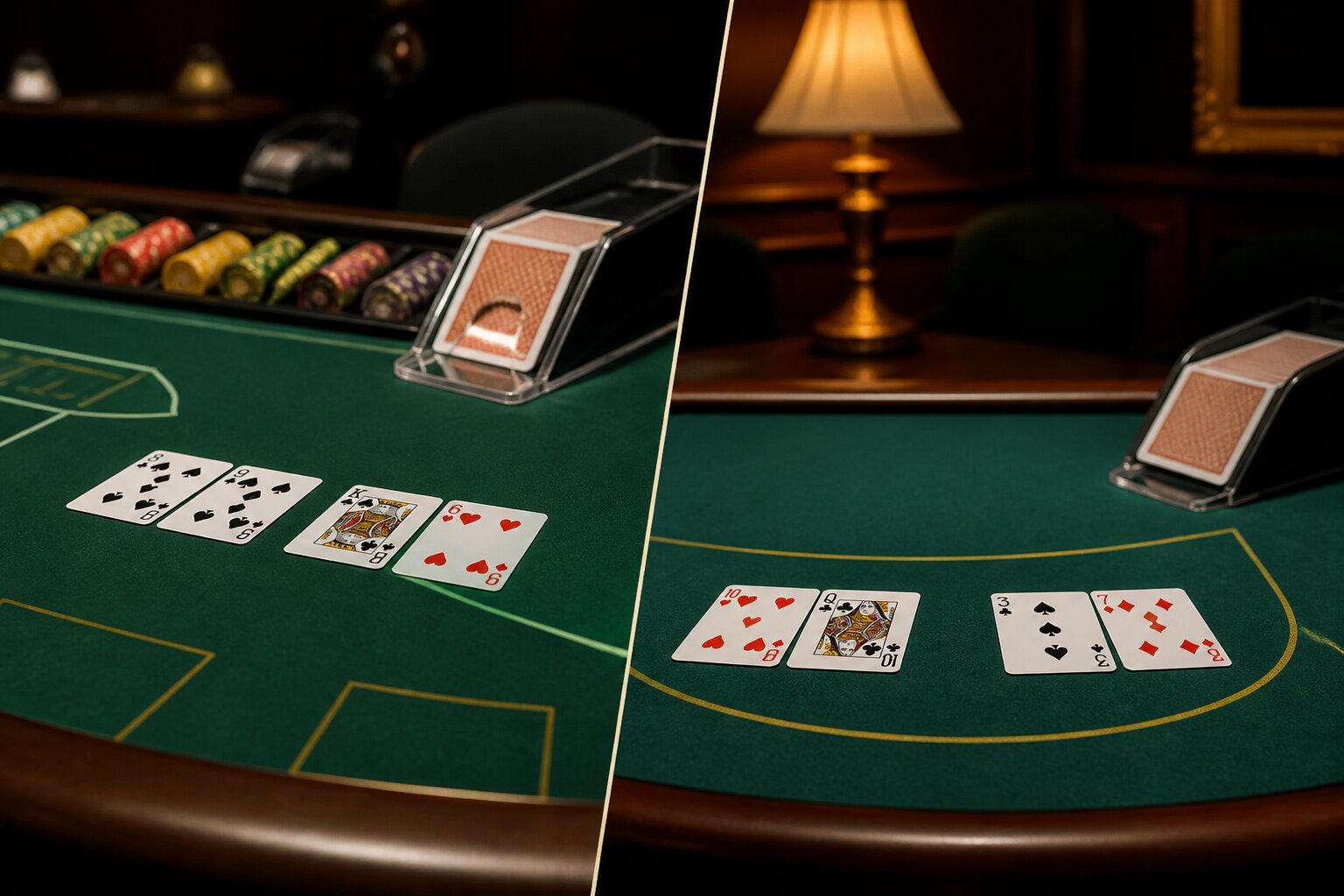
Ever fancied trying your hand at baccarat but felt put off by the high stakes and formal atmosphere? You’re not alone. Baccarat has a reputation for glamour, yet there are friendlier versions that suit smaller budgets and a more relaxed pace.
These variants — Midi and Mini Baccarat — keep the core objective the same but change how the game feels on the table: who handles the cards, how quickly rounds move, and how social the experience is. Read on to see which style might suit you best and how each one works in practice.
What Are Midi and Mini Baccarat?
Midi Baccarat and Mini Baccarat are two accessible takes on the classic punto banco format. Both focus on predicting whether the Player or Banker hand will win, but the tables, dealing and speed produce distinct atmospheres.
Midi Baccarat sits between the traditional full-size game and the streamlined mini version. It typically seats more players and sometimes allows a player to handle or turn over cards when their bet wins, creating a sociable, slightly ceremonious feel. Stakes are usually moderate compared with full-size tables, so it’s a middle-ground choice for those who like some table interaction without the highest limits.
Mini Baccarat pares things down. The dealer manages every stage of the round while players simply place bets, making the game brisk and efficient. Tables are smaller and minimum bets tend to be lower, which together make this variant attractive to newcomers and anyone who prefers quicker rounds.
How Do the Table Layouts and Sizes Compare?
Both variants display the same basic betting areas for Banker, Player and Tie, but their furniture and spacing tell a different story. Midi Baccarat tables are medium-sized, often seating up to nine players with more elbow room and sometimes an assistant croupier. That extra space allows for a slightly more formal layout and a slower rhythm to play.
Mini Baccarat uses a compact table with fewer seats—usually up to seven—and the dealer stands opposite the players, handling all cards alone. The layout is simpler and closer-knit, which speeds up betting and resolution of each round.
The physical differences influence how a session feels: Midi invites a relaxed, social approach while Mini emphasises speed and convenience. Next, we’ll look at how that affects what happens during a hand.
Key Differences in Gameplay
The most visible contrast is who touches the cards. In Midi Baccarat the ritual of handing cards to a player to reveal a winning hand can create a communal moment and naturally slows the pace. That interaction often leads to more conversation and a measured tempo to each round.
Mini Baccarat removes that ritual. The dealer deals, turns and announces outcomes, which keeps the action compact and predictable. This streamlined process results in more hands per hour and a less formal table presence.
Rules for scoring and the core betting options remain aligned with punto banco practice, so the strategic considerations and expected returns don’t shift between versions. What does vary is presentation, pace and how much table-side interaction you want from a session. The next section explains how the roles of dealer and players make those differences possible.
Player and Dealer Roles Explained
Dealers maintain overall control in both formats, but their responsibilities differ in emphasis. In Midi Baccarat the dealer manages shuffling, cutting and settlement, yet the game allows for a player — usually the largest matching bettor — to reveal the cards for the winning section. This ritual does not alter the dealer’s authority; they still resolve disputes, apply table rules and ensure correct payouts.
In Mini Baccarat the dealer performs every task directly: accepting bets, dealing, revealing cards and paying winners. Players do not handle the cards or interfere with the process, which reduces delays and maintains consistent procedure.
These role distinctions shape the atmosphere and tempo of play while preserving fairness and regulated handling of the game. With that routine in place, the mechanics of betting and payouts function the same across both variants.
How Are Bets Placed and Payouts Calculated?
Bets in both versions are placed on marked areas for Player, Banker or Tie before cards are dealt. Once betting closes, the hands are resolved and winners paid by the dealer. Mini Baccarat’s speed means those steps happen faster, while Midi’s occasional card-reveal ritual can extend round length slightly.
What you can wager on is straightforward: Player, Banker or Tie are the standard options. Some casinos offer side bets like pairs or bonus bets, but those are optional extras and differ by venue.
Typical payouts are:
- Player Bet: paid at 1:1. A £10 winning Player bet returns your £10 stake plus £10 in winnings.
- Banker Bet: paid at 1:1 with a commission taken on winnings (commonly 5%), so a £10 winning Banker wager typically yields £9.50 in profit plus the original stake.
- Tie Bet: usually pays around 8:1, so a £10 winning Tie returns £80 profit plus the stake, though the probability of a tie is much lower than the other two outcomes.
Dealers calculate and settle payouts at the table immediately after results are declared. If a venue offers side bets, check that table’s specific rules and odds before staking money. Next, we’ll look at how those payouts relate to house edge and odds.
House Edge and Odds for Midi vs Mini Baccarat
Because both versions follow the same punto banco mechanics, house edge and odds for the principal bets are effectively the same whether you play Midi or Mini. The standard figures used by most casinos are:
- Player bet: around 1.24% house edge.
- Banker bet: about 1.06% house edge (this includes the typical commission on Banker winnings).
- Tie bet: a much higher house edge, often above 14%, despite the larger payout.
These percentages mean the Banker bet is statistically the most favourable over the long run, while the Tie bet is unlikely to be profitable over time despite its headline payout. The speed of Mini Baccarat can cause money to move through an account faster, but it does not change the underlying odds. With those maths in mind, the final choice tends to rest on style and tempo.
Which Version Is Right for You?
If you prefer a social table where turns to reveal cards add ritual and time between rounds, Midi Baccarat will probably suit you better. It offers a measured, interactive session without the high stakes of full-size baccarat.
If you favour quick, no-fuss rounds where the dealer manages everything and more hands are played each hour, Mini Baccarat is the clearer choice. Its compact table and dealer-led play make it easy to join a game and keep things moving.
Both versions offer the same core bets and comparable expected returns, so selecting one comes down to whether you want a sociable experience or a brisk one. Pick the style that matches how you like to play, and you’ll get the most from your time at the table.
Approach play with clear limits and be aware of house rules at the table you choose, so your session stays controlled and enjoyable.
Play Casino Games at Pay By Mobile Casino
Fancy a bit of entertainment that fits around your day? We’d love for you to experience all the fun our site has to offer.
Getting involved is simple: just set up your account, make a deposit and you’re ready to play. Come and see what makes playing with us enjoyable.
**The information provided in this blog is intended for educational purposes and should not be construed as betting advice or a guarantee of success. Always gamble responsibly.