
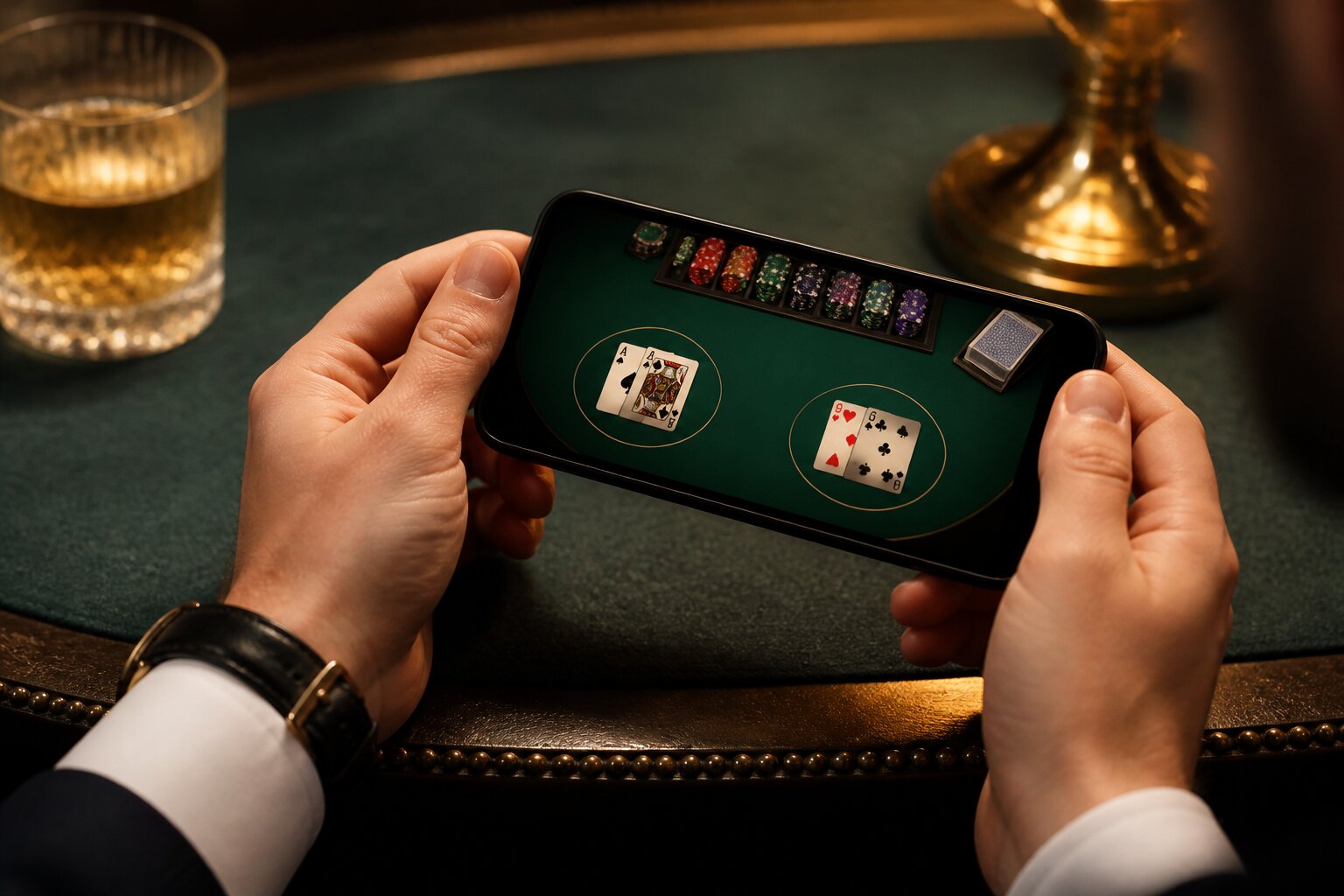
Picture this: you’re playing blackjack on your phone during a quick tea break and the age-old question pops up — should you stick with one hand, or play two? It’s like choosing between one biscuit with your brew or treating yourself to a pair. That little voice wonders whether more hands mean better outcomes or simply more risk.
Playing multiple hands on a mobile app is tempting. The extra action can be engaging, but it also changes how you manage bets, attention and time. Understanding those differences will help you choose the approach that fits your style and device.
Deciding between one or two hands isn’t only about potential wins; it’s about tempo, budget and how comfortable you feel making extra decisions.
How Does Playing Multiple Hands Work in Mobile Blackjack?
Mobile blackjack games typically show several betting spots on the table screen; each spot represents a hand you can play that round. To play two hands you tap two spots and place a separate stake on each, so a £1 bet per hand becomes £2 for the round. Once bets are placed, cards are dealt to every active hand and you play them sequentially, with the interface switching focus between hands, the dealer’s upcard and your options.
Some games cap the number of hands you can play; others allow more. Designs vary, so some apps split the view cleanly between hands while others compress the layout, which can affect clarity. Because each additional hand increases your total wager, it’s sensible to check stake limits and use any on-screen budget tools to keep spending in check. If your app supports it, try a short practice session to see how the layout handles two hands before committing to larger stakes. This helps prepare you for the faster pace that follows.
Key Differences Between One and Two Hand Play
Playing one or two hands changes your rhythm, decisions and exposure on each round. With a single hand you place one stake and make one decision at a time, which suits a measured, deliberate pace. Two hands mean two stakes and two sets of choices, speeding up rounds and increasing how much is at risk. That makes tracking your balance and reacting to each situation more demanding, but it also keeps the action continuous.
Beyond stakes and tempo, there’s a difference in how you can experiment with strategy. Two hands let you try contrasting approaches within the same round — one conservative, one more aggressive — which can be informative for your longer-term play. Device size matters too: larger screens make juggling two hands easier, while smaller phones can feel cramped. Bearing these trade-offs in mind will help you pick the set-up that matches your budget and attention span.
Benefits of Playing One Hand
Playing a single hand keeps things clear and manageable. One stake per round makes it easier to watch your balance and set a consistent betting plan. The gameplay itself is less hectic: focusing on a single set of cards reduces the chance of misclicks or hurried choices, and the tempo tends to be steadier, which many players find more comfortable on a phone.
This simplicity also supports clearer decision-making. With only one hand to consider, it’s easier to weigh options like hitting, standing or doubling down, and to notice how the dealer’s upcard affects your decisions. If you want a calmer session that’s straightforward to budget for, one-hand play often fits best. If you prefer a change of pace later, switching to two hands can be done, but the single-hand approach is a reliable base to build from.
Advantages of Playing Two Hands
Playing two hands increases involvement and keeps the screen active: there’s always another decision to make. The main practical benefit is variety — you can apply different tactics to each hand within the same round, which helps you explore how different choices perform under identical dealer cards. For players who like a brisker rhythm, two hands provide consistent engagement.
That said, doubling up places more of your bankroll at risk each round and requires closer tracking of total stakes. Device clarity is a real factor: tablets and larger phones generally show both hands clearly, while smaller screens can make the layout feel busy. If you enjoy comparing outcomes in real time and can comfortably monitor your bankroll, two-hand play adds interest without changing the underlying game mechanics. Be mindful of stakes and use available deposit or session tools if you want extra control.
Factors to Consider Before Choosing Your Approach
Choosing one or two hands should reflect your playing style, session goals and the device you’re using. Think about how long you want to play, how closely you want to monitor your spending, and whether you prefer a measured pace or a livelier session. Matching the number of hands to those preferences helps maintain a balance between enjoyment and control.
How Do Table Rules Impact Your Choice?
Table rules and betting limits can influence whether one or two hands make sense. Some mobile tables only allow a single hand, while others permit multiple spots. Minimum and maximum bet levels matter too: a higher minimum per spot increases the cost of playing two hands. Seat availability on virtual tables can also limit choices, so look at a game’s betting grid and spot count before starting to play. Choosing a table with limits that align with your budget will help prevent unexpected increases in round stakes and make your session more predictable.
What Device Limitations Should You Be Aware Of?
Small screens compress information and make buttons and card images tighter, which can lead to mis-taps and reduced clarity when managing more than one hand. Mobile-optimised apps usually handle this better, but not every game scales neatly. If the interface looks crowded, or if it takes extra time to select options, that friction can affect decision quality.
On larger phones and tablets the visual separation between hands is clearer and the extra cards don’t feel cramped, which is why some players prefer two hands on those devices. Consider trying a few rounds with low stakes to see how your device handles multiple hands before increasing bets.
User Experience: What Do Players Prefer on Mobile?
Player preferences split largely by device and play style. Many smartphone users appreciate the clarity and control of a single hand: it keeps sessions simple and reduces the risk of errors. Others, particularly those on tablets, enjoy two hands for the added tempo and tactical variety. Community feedback suggests many players start with one hand and switch to two when they want a change of pace, rather than committing to one mode permanently.
Whichever option you favour, make sure it fits the device and limits you’re comfortable with so the session remains enjoyable. If you want to explore both approaches, trying each for short periods is a good way to discover what suits your rhythm and bankroll. In the end, picking the right number of hands is about matching the game to the way you like to play and keeping control of your session throughout.
Play Online Casino Games at Pay By Mobile Casino
We welcome you to explore a world of entertainment at Pay By Mobile Casino, where you can enjoy a wide selection of online casino games with plenty of choice and variety on offer. There is something for everyone to enjoy as part of our friendly community.
**The information provided in this blog is intended for educational purposes and should not be construed as betting advice or a guarantee of success. Always gamble responsibly.