
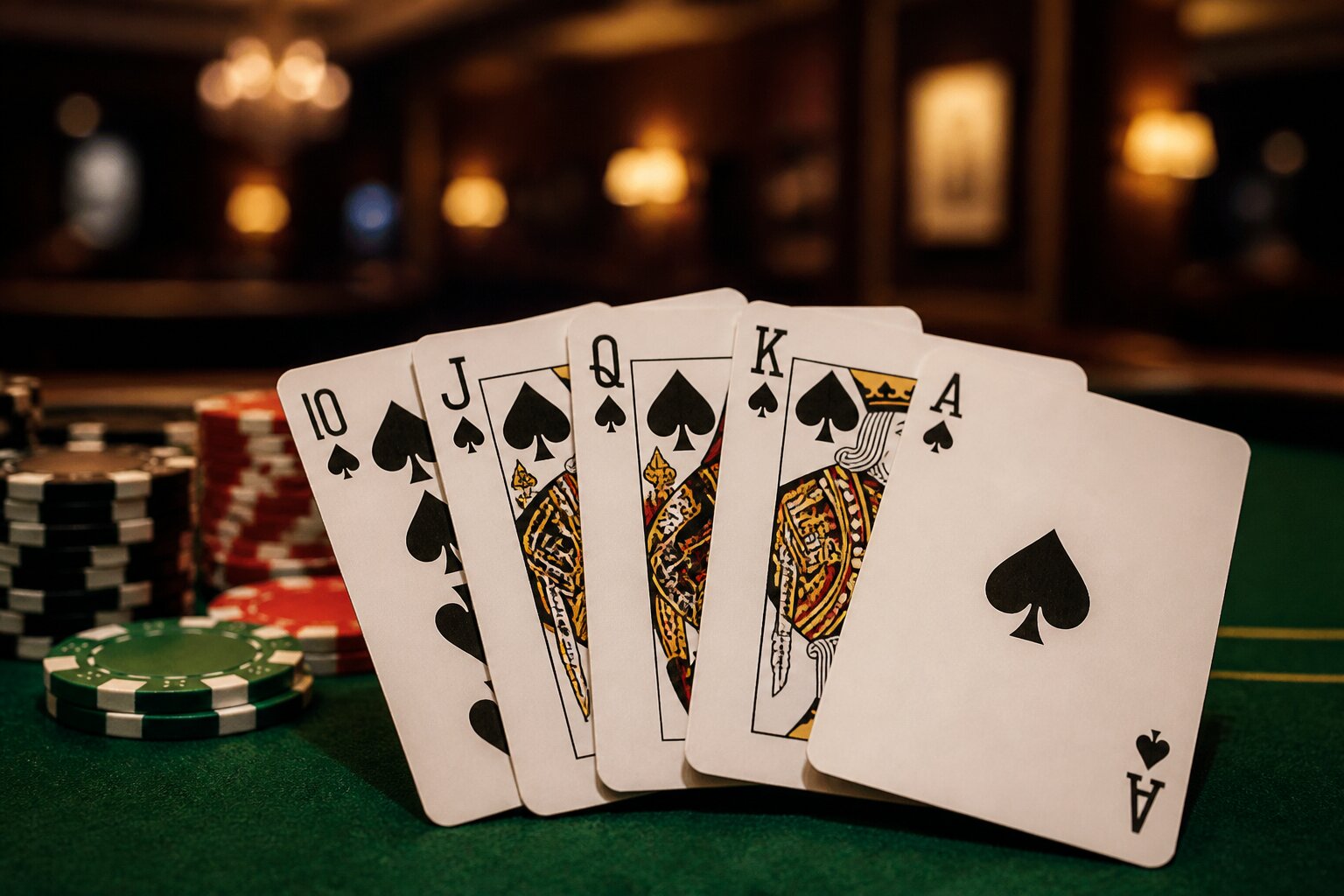
Ever sat at a blackjack table and thought you’d hit the perfect run of cards, only to hear the phrase “straight flush” thrown around? It’s a term that stirs up excitement at any card table, but its meaning can be surprisingly slippery, especially if you’re used to the world of poker.
Blackjack and poker might share the same deck, but when it comes to what makes a truly special hand, they couldn’t be more different. Anyone who’s played online or at a bricks-and-mortar casino in the UK is likely familiar with chasing a blackjack, but a straight flush is a much rarer beast and not quite what it seems at first glance.
Why do dealers get a twinkle in their eye when the topic comes up, and how does the value of a straight flush in blackjack compare to that in poker? Whether you’re a casual player or a seasoned regular, understanding this curious hand can make your next game more interesting and help you choose whether that side bet is worth a punt.
What Is a Straight Flush in Blackjack?
In blackjack, a straight flush isn’t part of the basic game play but appears in certain side bets. Here it means three consecutive cards of the same suit, usually formed by your first two cards plus the dealer’s upcard. Examples are 7-8-9 of hearts or 4-5-6 of spades.
This combination is typically recognised only when you place a 21+3-style side bet. The side bet compares your initial two cards with the dealer’s visible card and pays according to specific poker-style combinations. A straight flush in that context qualifies only if those three cards are both consecutive and suited.
Because it uses three cards instead of poker’s five, a blackjack straight flush is a different animal from the poker hand of the same name. Regular blackjack play does not award anything extra for such a combination unless the side bet is active. Read on to see how often it turns up and why casinos price the payouts as they do.
How Rare Is the Straight Flush in Blackjack?
A straight flush in a 21+3 side bet is uncommon. When your first two cards and the dealer’s upcard must line up in exact sequence and suit, the number of qualifying combinations is small compared with all possible three-card sets.
With a six-deck shoe, a typical casino setup, the odds of hitting a straight flush in 21+3 are approximately 1 in 2,767 hands. Two-deck games improve those odds slightly, to around 1 in 2,674. Single-deck games are a little better still, though single-deck blackjack is rare in many venues.
Because these outcomes are infrequent, casinos offer high fixed payouts for them—often in the region of 40:1 or higher on the side bet. Those large payouts are balanced by a higher house edge on the side bet than on the main blackjack game, which helps explain why the prize looks generous even though wins are sparse. Next, we’ll compare how this three-card payoff stacks up against poker’s five-card straight flush.
Straight Flush vs Poker Straight Flush: Main Differences
Although the name is the same, the hands are not equivalent between the two games.
In poker, a straight flush is formed from five consecutive cards of the same suit and ranks as one of the strongest hands in most variants. A royal flush—10-J-Q-K-A of the same suit—is the highest example.
In blackjack side bets such as 21+3, the straight flush uses only three cards: the player’s first two and the dealer’s upcard. All three must be consecutive and suited, for instance 3-4-5 of spades. The result affects only the side bet payout rather than the main blackjack outcome.
| Feature | Poker Straight Flush | Blackjack Straight Flush (21+3) |
|---|---|---|
| Number of Cards Needed | 5 | 3 |
| Cards Involved | Player’s own five cards | Player’s first two + dealer’s upcard |
| Game Impact | Ranks among the top hands; wins the main pot | Pays the side bet only (if placed) |
| Payout/Prize | Main pot win; amount varies by stakes | Fixed side bet payout (e.g. 40:1+) |
| Frequency | Very rare, but central to hand rankings | Very rare, only applies to side bet outcomes |
| Example | 7-8-9-10-J of clubs | 7-8-9 of hearts |
Poker relies on five-card hand rankings and affects the core contest between players. Blackjack’s three-card straight flush is a separate wager layered on top of the main game. The contrast is why it’s important to recognise which rules and pay tables apply at the table you’re playing.
Blackjack Payouts and House Edge Explained
Standard blackjack pays out predictably: a basic win returns 1:1, so a £10 bet yields £10 profit on a win. A blackjack—an ace plus any 10-value card—commonly pays 3:2, returning £15 on a £10 stake. Insurance, where available, pays 2:1 if the dealer has blackjack.
Side bets such as 21+3 bring larger fixed payouts for rare combinations. A straight flush might pay 40:1 or more on the side bet, so a £5 wager could return £200 if the three-card combo appears. Other side-bet hands—like three of a kind or a standard flush—pay less, reflecting their higher frequencies.
House edge is the long-run advantage the casino holds. With good basic strategy, standard blackjack often has a house edge between about 0.5% and 1%. Side bets carry considerably higher edges—many 21+3 pay tables show house edges in the 3.5% to 7% range, varying with deck count and exact pay schedule. That difference explains why side bets can be tempting in the short term but unfavourable over many hands. If you choose to play side bets, treat them as occasional extras and keep stakes modest.
Understanding Side Bets Linked to a Straight Flush
Side bets are optional wagers placed alongside the main blackjack stake and usually focus on the first few cards dealt. The most familiar example tied to a straight flush is the 21+3 bet, which evaluates the player’s two cards plus the dealer’s upcard against poker-style combinations.
Payout tables list the qualifying hands and their rewards. For 21+3, a straight flush tends to be among the top payouts, with three-of-a-kind, flush and straight paying mid-range amounts. Other side-bet variations exist—names such as Lucky Lucky and Suited Three of a Kind may turn up—with slightly different qualifying sets and pay tables.
These bets are not part of regular blackjack strategy but rather a way to add variety. Their higher payouts reflect lower probabilities, while the higher house edge reflects the casino’s margin. If you like the extra thrill, use small, pre-set amounts for side bets so they remain a clear supplement to your primary play.
Are Straight Flush Side Bets Worth It?
They offer tempting returns but appear infrequently, and that infrequency is priced into the house edge. For many players the side bet is entertaining and occasional, rather than an expected source of profit. If evaluating value, compare the stated payouts and house edge for a given table; that will show whether the risk matches the reward you want to take on.
The pragmatic approach is to treat side bets as an optional add-on and not part of a plan to beat the game, keeping any wagers within an entertainment budget.
Which Blackjack Variants Include Straight Flush Side Bets?
The most common place to find straight-flush-style side bets is on games offering a 21+3 option. Other side-bet products that might pay for suited sequences or suited triples include Lucky Lucky and variants labelled Suited Three of a Kind, though these appear less often.
Most standard blackjack tables do not include such side bets by default. Before placing a supplementary wager, check the table’s pay table and house edge so you know exactly which combinations qualify and what they pay. The specific rules at the table determine how that three-card hand will be judged and rewarded.
Why Players Confuse Blackjack and Poker Hands
Shared terminology is the main reason confusion arises. Words like straight, flush and straight flush originate in poker’s five-card hand rankings, so when those labels appear in a blackjack context they can mislead players into assuming the same meanings apply.
In poker, five suited consecutive cards are an unmistakable straight flush. In blackjack’s side bets the term refers to three cards instead, and that difference in card count alters both the probability and the payout structure. Flavour text on pay tables can also borrow poker phrasing such as “three of a kind” or “full house,” which in blackjack-side-bet terms will often describe three-card outcomes rather than five-card ones.
Misunderstanding is often compounded by seeing poker-style payouts at a blackjack table; it feels familiar, but the underlying mechanics are different. The simplest way to avoid surprises is to look at the pay table and the exact definitions printed on the table or screen before placing a side bet. That makes the rules clear and lets a player decide whether the potential payout justifies the risk.
Understanding the terminology and the pay tables makes the experience clearer and helps you play with realistic expectations.
Enjoy Casino Games at Pay By Mobile Casino
We invite you to enjoy a relaxed and welcoming casino experience with us at Pay By Mobile Casino. Take your time and play whenever it suits you, all in your own way.
Getting started is simple: just register, make a deposit and you are ready to explore. We look forward to welcoming you to our community.
**The information provided in this blog is intended for educational purposes and should not be construed as betting advice or a guarantee of success. Always gamble responsibly.