
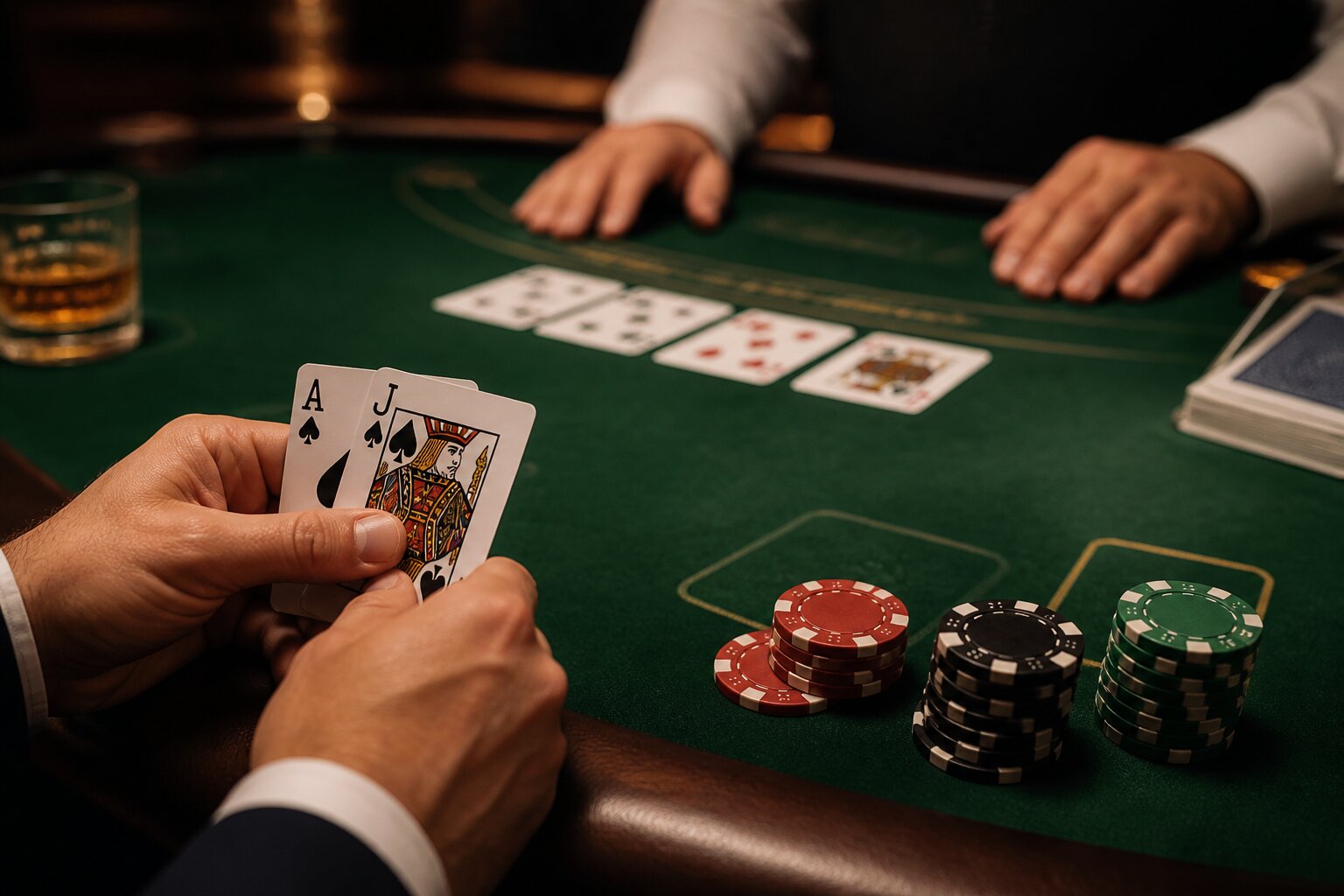
Ever wondered why that winning hand in blackjack does not always pay out the same? You land a blackjack and suddenly there is more in your pocket than you expected, but a regular win can look rather different. There are clear rules behind those familiar chips stacking up at the table.
The buzz of playing blackjack comes from the mix of skill, probability, and quick decisions, yet understanding what your hand is worth is what separates casual play from smarter choices. Whether you play in a casino or online, most people know the house has the edge, but only a few truly understand how that advantage is built.
Knowing the rules behind payouts and odds gives you a practical edge: it helps you manage your money and choose the best tables. Read on to see how payout rates, side bets and house edge affect your expected returns, and what to check before you play.
What Does Blackjack Pay and Why Does It Matter?
A classic blackjack — an Ace with any ten-value card — is usually paid at 3 to 2. For example, a £10 bet that becomes a blackjack returns £15 in winnings plus the original £10 stake. A regular win, when your hand beats the dealer without exceeding 21, is normally paid at even money, or 1 to 1.
Payouts matter because they directly affect your returns over many hands. A small change in the blackjack payout, such as a shift from 3 to 2 down to 6 to 5, reduces what you receive on each natural and gradually increases the casino’s long-term advantage. Knowing the payout structure helps you pick tables that give you better value and avoid ones that quietly cost you more.
Aside from the main payouts, the way a dealer handles pushes, insurance offers, or dealer blackjack rules can alter expected returns, so it is worth checking table rules. With that context in mind, the next section looks at how different payout schemes and extra wagers change the maths of play.
Understanding Standard vs. Alternative Blackjack Payouts
Tables do not all operate the same way. The standard payout for a blackjack is 3 to 2, but some venues offer reduced payouts such as 6 to 5. Over time, that reduction substantially increases the house advantage because fewer winnings are paid on naturals.
Side bets provide alternative payout structures. These are separate wagers resolved independently of the main hand and typically offer larger listed payouts for specific outcomes, for example a matched pair or a poker-style combination with the dealer’s upcard. Payouts for side bets can be high — sometimes tens or even hundreds to one for rare outcomes — but the probability of those outcomes is much lower than for the main game, which affects their long-term value.
When assessing a table, look at both the main-game payout and the side-bet schedule. Tables that keep the classic 3 to 2 payout and limit unfavourable rule changes usually deliver a lower house edge than tables that reduce blackjack payouts or encourage frequent side-bet play. The next section breaks down the underlying odds that those payouts reflect.
What Is the Typical Blackjack Payout?
The typical 3 to 2 payout means a £20 bet that becomes a blackjack returns £30 in winnings, plus the £20 stake. A 6 to 5 payout on the same £20 bet returns only £24 in winnings plus the stake. Over many hands, the difference in these figures has a measurable impact on expected returns, making the full payout the preferable option for most players.
Blackjack Odds Explained Simply
Blackjack is governed by probabilities tied to the composition of the deck or shoe and the rules in play. The chance of receiving a natural in a typical multi-deck game is about 4.8%, or roughly one natural in every 21 deals. How often you win with a regular hand depends on your decisions and on those same probabilities; using an established basic strategy tends to produce the best average outcomes for a non-card-counter.
Bust chances vary according to the total you hold. For instance, taking another card on 16 gives a high probability of exceeding 21, while hitting on 12 carries a significantly lower bust risk. These conditional probabilities inform the standard basic strategy charts players often consult.
Expected return can be expressed as a percentage of stakes returned over a long period. Under common rules, with correct basic strategy and 3 to 2 payouts, a player’s return is close to 99% of wagers, which corresponds to a low house edge. Changes to payout rates or dealer rules will move that percentage, often lowering it. Next, we’ll place blackjack’s payouts and house edge in context by comparing them to other casino games.
Comparing Blackjack Payouts to Other Casino Games
Different games present different payout structures and house edges, so the overall experience varies. Blackjack, when played under player-friendly rules and with correct strategy, typically offers one of the lowest house edges among common casino games. For example, a proper blackjack game with 3 to 2 payouts and standard rules can have a house edge around 0.5%. Roulette on a single-zero wheel carries a house edge of about 2.7% on even-money bets. Baccarat’s Banker bet, after commission, produces a house edge near 1.1%. Slot machines vary widely; some have a low house edge while many return significantly less than the amounts wagered over time.
These differences mean blackjack is often the better long-term proposition in terms of percentage returns, but other games offer different risk-reward profiles. Where blackjack rewards skillful decisions and rule selection, slots and some table games deliver volatility and the chance of large single-event payouts. With that comparative picture, the following section explains how the concept of house edge applies specifically to blackjack.
What House Edge Means for Blackjack Players
The house edge is the percentage that, on average, the casino keeps from all wagers over a long period. In blackjack, that percentage is shaped by payout rates, rule variations, and the player’s strategy. Under favourable rules and disciplined play using basic strategy, the edge can be as low as 0.5%. If blackjacks are paid at lower rates or if additional rules favour the dealer, the edge increases and might reach 2% or more.
A lower house edge means a higher expected return on money wagered over many hands, but it does not determine outcomes for single sessions. Understanding the house edge helps set realistic expectations and supports sensible session planning. The next section offers practical guidance on checking payout details so those expectations match reality.
Practical Tips for Checking Payouts When Playing
Before you commit money, check how much a blackjack pays and whether side bets or special rules apply. At a physical table, payout information is often printed on the felt or displayed nearby; a quick look will show the advertised rate for naturals. Online, the game’s information or paytable usually lists payouts and rule variations.
Also pay attention to dealer hits or stands on soft totals, whether surrender is available, and whether doubling after split is permitted. These details change expected returns and should influence table choice. Inspect minimum and maximum bets as well, since they determine session flexibility.
Manage a clear budget for each session and stick to it. Keeping control of stakes is an important part of safe play and helps you make decisions that align with the seat you have chosen. With those checks made, you will be able to choose tables that match your preference for lower house edge or higher volatility, and enjoy play with realistic expectations.
Playing with an understanding of payouts, odds and house edge makes blackjack less mysterious and more a game of informed choices.
Enjoy Casino Games at Pay By Mobile Casino
We welcome you to explore our casino games and enjoy the experience in your own time. Play at your own pace and make the most of the entertainment on offer with us.
Getting started is straightforward: simply create an account, make a deposit and you can begin playing. We look forward to having you with us.
**The information provided in this blog is intended for educational purposes and should not be construed as betting advice or a guarantee of success. Always gamble responsibly.